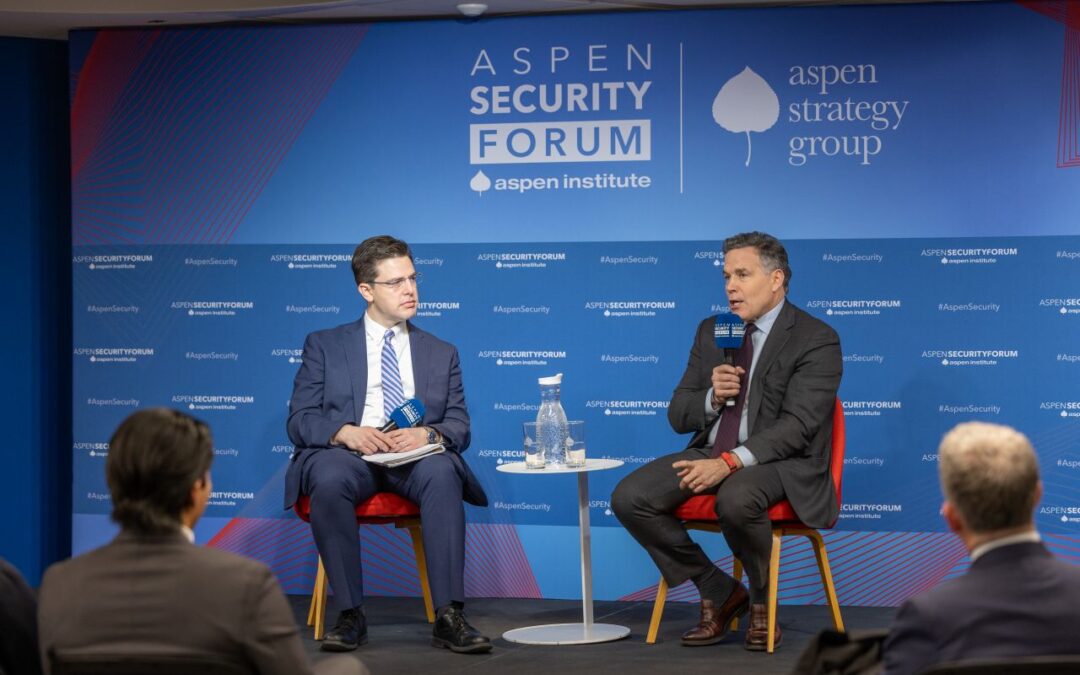
Speakers
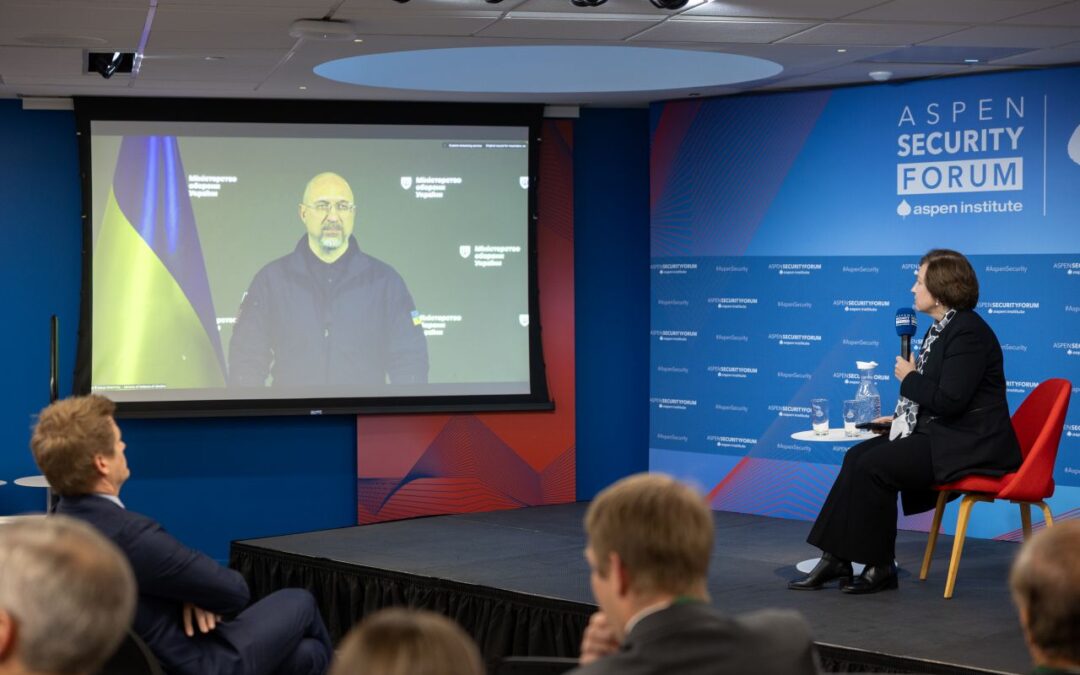
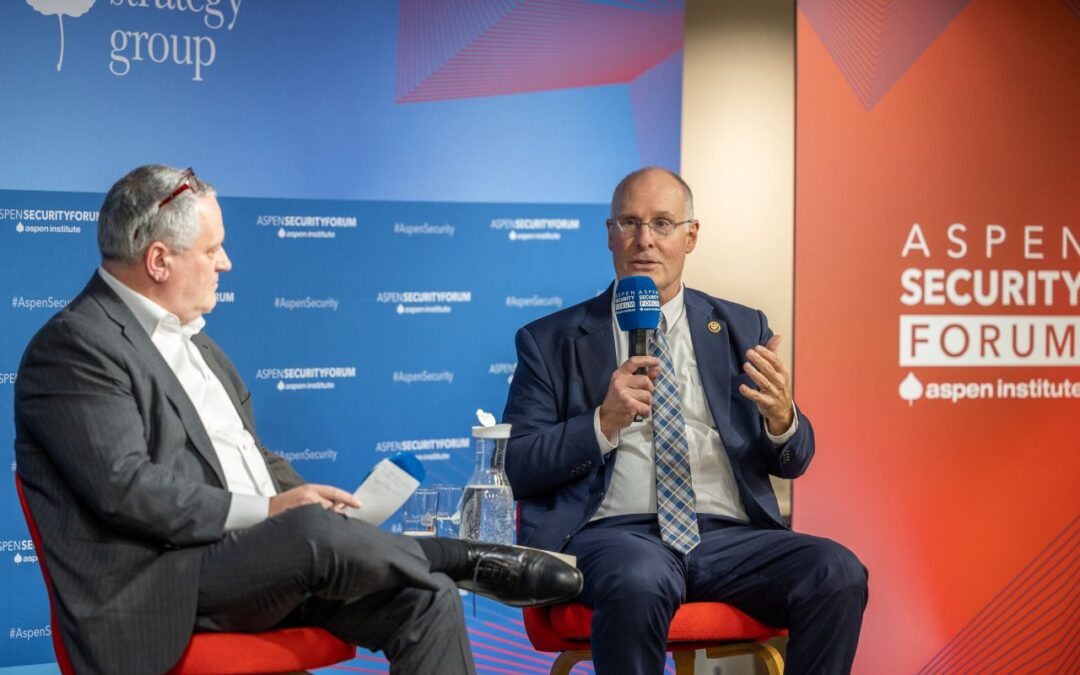
Radmila Shekerinska, Deputy Secretary General, NATO
Moderator: Nick Schifrin, PBS NewsHour
Full Transcript
Read the full transcript below or download it to your device.
Click to read the full transcript
Schifrin
Radmila Shekerinska, thanks very much. You are not only the Deputy Secretary General of NATO, but you’re the former Deputy Prime Minister and Minister of Defense of North Macedonia, and that will come up. I am Nick Schifrin. I’m the foreign affairs and defense correspondent from PBS NewsHour. And while Aspen has a goal of creating unity and understanding, with that risk, I may ask a few pointed questions about some of the administration’s recent language on Europe, because that is the elephant in the room these days. And let me start with the national security strategy of the Trump administration that’s been released on Friday, and before I get to some of the rhetoric in that document, let’s talk about the substance. The document suggests strongly prioritizes what it calls strategic stability with Russia. Trump administration is on back. Trump administration officials on background regularly talk about a desire long term, to have economic ties to Russia. That is fundamentally different than how Europe assesses Russia as a long term threat. So how can NATO plan for the future when the Trump administration considers Russia a future partner, and nearly every other NATO member sees Russia as a long term adversary?
Shekerinska
Well, first, let me, let me thank the Aspen Institute for organizing this. It’s great to be in DC. We have had a series of meetings, also with the NATO Parliamentary Assembly. And the idea was that security does not belong only to governments, but very much also to our parliaments, to the representatives of our citizens. And we also had quite an interesting discussion with other think tanks and institutes. You have mentioned, the national security strategy, and it is true that almost all NATO allies come forward with strategic documents on their security points, and we never comment on them. We don’t comment on them, and we always refer questions regarding the content of the document to the administration that produces it. What we focus in NATO is, of course, on doing our core mission, focusing on our core business, and this is to guarantee the collective security of 32 allies. We have been very focused on our priorities, and we have been very clear eyed about different threats that we have. And in The Hague summit just a few months ago, it was an important, historic, Game Changing Summit, and the outcome was difficult to forecast. I remember many of these discussions happening in the two months before the summit, and many people wondering whether there will be a conclusion, and we have made it, because 32 allies agreed that we need a stronger NATO, and we need also a NATO that clearly allows for more of a burden sharing, and this is what we focus on. So on one side, the US commitment to NATO and Euro Atlantic security was clear, but what was also clear was the expectation that European allies in Canada will do more. We believe that it has been long overdue and that this is a fair call, so our focus is on these two things together, with a strong support to Ukraine.
Schifrin
But again, can NATO be stronger if Washington and the vast majority of every other country in NATO has a different assessment of what Russia is long term?
Shekerinska
I am extremely clear in all of the discussions that within the Alliance, including at The Hague Summit, we had a very, very short but very clear sentence that Russia remains to be the direct long term threat.
Schifrin
Although that was heavily negotiated before that sentence was agreed.
Shekerinska
You know, 32 allies sitting around the table and agreeing on any sentence is sometimes difficult. This has been the case of the Alliance since we know it. And actually, if you go back to your organization, your decision making bodies, it is always the case. So I don’t believe that easy solutions are the best solutions. So we have negotiated this statement. There were a number of difficult decisions, agreeing to do 5% of GDP on defense and defense related investments is not a breakthrough. It was a shock for many people who have believed that unity will be possible on this issue, but we have delivered, because the threat is loud and clear.
Schifrin
You’re going to have the same answers to these questions, but I mentioned that I do have to ask about the rhetoric. Of course, the document includes this phrase, “the EU and other transnational bodies undermine political liberty and sovereignty.” Do they?
Shekerinska
As I told you, if we start speaking and choosing and commenting on every sentence in different documents, we will end up really being the talking club and not the doers club. But you know, 32 allies have met, not only in The Hague. They meet regularly. Our North Atlantic Council meets three to four times every week. And these decisions affect not only our security in terms of policy documents and agreed documents, but very much what happens in real life, how we are postured at the eastern flank, how we train, how we procure things, how we define our our spending trajectory in the future, how we deal with defense industry. I see some faces reminding me of this. So these are bread and butter issues for our security, and we like to focus on them because they bring substance to the table.
Schifrin
I’ll spare you asking it again, but what I will say is this,
Shekerinska
As I told you, I saw some cardiology, just in case.
Schifrin
You know, there’s more language, right? We’ve all seen it. You know, Europe faces civilizational erasure. A US goal is cultivating resistance to Europe’s current trajectory within European nations. Document questions whether NATO will remain reliable allies. But the language has an impact. And just to have one example, today, a Danish Defense Intelligence Service said uncertainty about the US’s role as a guarantor of Europe’s security will increase Russia’s willingness to intensify hybrid attacks against NATO. So I know you don’t want to talk about the language itself, but is there an impact of this language that you will get more Russian aggressiveness toward NATO?
Shekerinska
All our adversaries, and especially Russia, has been trying to undermine our unity on multiple fronts, and they have been more reckless, also with regards to behavior in airspace, incursions, drones, jets, everything. But this is what, in a way, we are used to. This is why NATO was envisaged to protect for collective security. And what we do very well is to try to approach it with big action. Let me talk about generally this perception. Are we committed enough? Is every Ally committed enough? You mentioned my example as a my experience as a minister of defense of North Macedonia, I joined first ministerial meeting within NATO before my country joined the Alliance, because we were part of the coalition in Afghanistan. So we had always Resolute Support meetings at the end of a normal NATO ministerial. And I was shocked, as a newcomer trying to, you know, convince everyone that they should support our entry into NATO. I was shocked that even though the discussion was on Afghanistan, it would always start with a US secretary raising the issue of burden sharing and European allies in Canada doing more in defense investment, and several European ministers saying, we agree, but maybe next year. So I can also understand that from the point of view of Americans, they also challenge, are we in Europe committed enough? Because if you go back through history books, you will see that this has been tailored all this time, or is NATO. Eisenhower, Kennedy, everyone, every administration.
Schifrin
And the Trump administration does deserve credit for, regardless of the style, the substance is, there’s now a 5% pledge.
Shekerinska
It is true that not only the 5% pledge, but this is the first year where we will have all allies above or at 2% which was not the case last year, which was not the case two years ago, and this is the first time that we have agreed not only capability targets, but actually 3.5% for the capability target, and an extra 1.5 on defense industry readiness, military mobility, all the defense related issues. It’s a big thing, and it is not an evidence of questioned commitment by anyone, but actually confirmation that we have committed more.
Schifrin
Let me ask about Ukraine a little bit. I know you’re not going to want to. We can take a second to pour some water. I know you’re going to not going to want to talk about the ins and outs of the negotiations that are happening. Zelensky said today that Ukraine and the e3 were going to submit new language to the US. But let me just ask a broad question, given the language that I mentioned at the top, about how the Trump administration considers Russia. Do you believe that the United States is negotiating peace in Ukraine overall with the correct priorities?
Shekerinska
NATO has been very direct since the beginning. Secretary General was very clear that we have supported, and we commend U.S. President Trump’s efforts to bring an end to the war in Ukraine, to the war against Ukraine. He was the only one who could bring Putin to the negotiating table, because rightfully so, we are questioning whether Putin is really interested in peace. But it took this effort and this initiative to get Putin at the negotiating table. We have not discussed the elements of the negotiations, because we are not party. We do trust, not only our ally, the US, but also our colleagues and friends and partners Ukraine. They ar e the ones at the negotiating table, in this seat to make the difficult decisions. Our goal was, instead of talking about what they should do, to try to help them be stronger at the battlefield, be stronger at the negotiating table, and be stronger in the future. So our focus very much at the NATO summit, there was a very clear language on continued support to Ukraine. I know that many people had doubts, but also, this was an important moment for the summit. And immediately, two weeks after the summit was over, Secretary General came to DC to talk to U.S. President Trump, and to initiate a new model of support to Ukraine. And this is the so-called Pearl support, prioritized Ukraine requirement list, which is key military equipment from U.S. stockpiles, financed by European allies in Canada and going directly to Ukraine. I was in Ukraine two weeks ago. We had very open conversations with all of the stakeholders there, and they have all raised the issue of the importance of keeping this flow of essential military equipment coming, and we are committed to doing this.
Schifrin
A European official tells me the NATO request for Pearl for next year is as much as $14 billion. I think Zelensky said yesterday, $15 billion but a US official tells me that they’ve capped it at $12 billion. Can you confirm that? And what would be the impact of any cap imposed by the United States on parole?
Shekerinska
We have not discussed caps. We have discussed really, a very, very open ended process, which means that our focus for this year was to get this equipment in Ukraine as we speak, I think, after the first meeting between Secretary General and U.S. President Trump, in two weeks, first allies came forward with support, and until now, we have managed to have the commitment of two thirds allies to support pearl. The expectation is that by the end of this year, we will have 5 billion US dollars, and then we are planning for a more predictable process where we will not wait for several countries to agree on a package, but rather have a monthly flow. And let me tell you, especially on the issue of air defense, this is really a lifeline. Most of the Secretary General will share some details in the next few days. Almost all of the air defenses that protect civilians, that support energy infrastructure come from Pearl, and this is why I have really appreciated some, some of our European countries and European allies in Canada, really stepping up, coming up with several packages, and really showing what a support to Ukraine means in real terms. So you’ve not received any cap from the United there is, there has always been a very, very open approach when discussing with our US counterparts, and very much we all see this in support to the peace negotiations, because we know that in order for negotiations to end in a lasting peace, endurable peace, we need Ukraine to be strong. We need them to be strong in the future. And this is why it was very important that European allies have not only stepped up in terms of defense spending, we didn’t have time to discuss this, but they’re also stepping up in terms of supporting Ukraine, especially with the coalition of the willing. These are the security guarantees that we need for the long run.
Schifrin
As I mentioned, you’re the former defense minister of North Macedonia, and you were instrumental in getting North Macedon to become the 30th member of NATO five years ago. President Trump has said this publicly, so it’s not a surprise, but the national security strategy does state as a goal, quote, “Ending the perception and preventing the reality of NATO as a perpetually expanding Alliance.” Quote, unquote, what is the impact if the open door of NATO’s policy gets closed?
Shekerinska
I was someone who has profited very much because a citizen of North Macedonia to to this policy. And I have, I remember saying this to my to my colleagues and citizens, you know, we should use the open door policy because, you know, you need everyone on board. But when we talk about the principle or the policy, there is the principle and then there is the practicality of the principle, which means that for any decision with regards to enlarging, adding a new member, you need all 32 around the table. And I’m saying this as a former Minister of a country that has paid a huge price in terms of an enormous delay because of a lack of a consensus. The practical side in the present discussion is that we did not have, we do not have 32 anonymity, full consensus on Ukraine’s membership to NATO. And that is a fact.
Schifrin
That’s a fact, and that’s the practicality. But is there an impact if the principle is changed?
Shekerinska
As long as you don’t have the practical means, which means 32 on board, and we haven’t had them for quite some time, actually, I think it’s, it’s a waste of energy to talk about the policy. Well, when you have the vote, when you have the different positions by a number of countries, and this is, this was not new, to be honest.
Schifrin
Let’s talk about the threat posed by Russia to NATO. And let’s focus on something that you’ve been focused on, and NATO has been focused on, which is drones. And I’m going to split this into a couple of categories so one, it seems to me, is the pure military meaning, are NATO troops ready to understand, to confront the tactics that we see in eastern Ukraine when it comes to drones. So let me ask about that. First, I talked to a Ukrainian Sergeant recently who ran a red team, who ran the opposition team up in Estonia in a NATO exercise, and he told me that he played a Russian drone unit, just four or five guys, and the NATO troops, you know, did not do well. That’s how he put it. Is NATO ready for Ukraine? Russia style drone tactics? If the answer is no, how is it getting ready for those tactics?
Shekerinska
If you talk about NATO and you talk about military, and you talk about capabilities, training is an essential element. If there is, you know, something that we always do, that’s training, and we continue this focus. And what has happened, especially in the last year, was when we develop our partnership with Ukraine, many people tend to look at partnerships as a one way street. So it’s NATO providing partners with some know how, with some equipment, with political dialog. Now this has always been a two way street, and especially as at the beginning of this year, we have created our first joint entity with a partner with Ukraine. There is a big center J tech in Poland that basically focuses on lessons learned from the war in Ukraine, and this is what we also take into our planning, into our preparation and into our training. But it is also true, and this has been mentioned by many of our military leaders, is that for our deterrence and our defense, we would also fight differently and and there are other areas in which our superiority would have would be harnessed so, very mindful of the new technologies and the new developments, but also very strong on the, let’s say, the basics and the what NATO does well and continues to do well.
Schifrin
Although NATO members historically have used a lot of exquisite systems, and being faced by $30,000 drones is a different threat, and that gets us to the second category, if you will, the eastern flank. So, it’s called Eastern century. The efforts that NATO are undertaking to defend the eastern flank, as highlighted by the incursion of Russian drones over the last few months, certainly, frankly, over the last three and a half years. And Eastern century, I talked to a lot of people, there’s no one answer. There’s no one counter drone system. But is there a sustainable solution today where that you could or NATO could face off, NATO could confront Russian drones that are again, 30,000 $40,000 each. Is there a sustainable way to do that, instead of firing million-dollar missiles? Is there a counter drone system that exists today?
Shekerinska
The advantage that NATO had, and the advantage that we preserve is to be both strong and flexible, and this is the winning formula. So when we talk about strength, we do talk about defense investments. So what we have seen, even before the Hague summit, but especially afterwards, is a very strong commitment by a number of allies to really invest in their defense systems, in their military, in their security what we have seen in the Baltics, what we saw in Poland, what we saw in the Nordics, but very much, what remarkable change that we are seeing in Germany. They have committed to 3.5% of GDP by 29 and I think yesterday, their defense minister actually said that he wants to see Germany as a pacemaker in doing this. So this is the strength, but we also talk a lot about our flexibility, and this is where the Eastern century comes as an example. But I will go back in time just beginning of this year. We have had, in that time, different hybrid challenges. It was the Russian shadow fleet ships that have cut undersea infrastructure, endangering access to energy, endangering communication. And we saw this as a really strong vulnerability for our allies. So what we did was our military leaders initiated an activity which was called the Baltic century, so there is this century element moving forward. And it was not just that he moved a number of assets there, which is strength, right? But it’s also that he used a more flexible approach. And then they added more naval drones, but also naval sensors for better situational awareness. They have started testing additional technologies, together with defense industry, with armies. And you know, after Baltic century became fully operational, we have never had an incident of that kind. And it shows that the flexibility matters. And this is what we are doing now at the eastern flank. So it’s not just the assets that are there. We have always had strong assets. We have forward land forces in all the countries along the eastern time, but we have moved some of them, and then we really experiment, test and use the new technologies and combine them with what we have there.
Schifrin
But is there a sustainable solution today where you could shoot down $30,000 drones, not with million dollars?
Shekerinska
This is the focus, and this is where not only SACEUR, which is our Supreme Allied Commander in Europe, but also our Supreme Allied Commander on transformation, the admiral Vandier, they are actually developing this together with defense industries, together with different armies. And the idea is actually to showcase the flexibility and to be able to provide this kind of defense and deterrence.
Schifrin
All right, we’ve got a little bit between five and 10 minutes or no, sorry, we’ve got out of time. Okay, all right. Well, here I thought I was gonna be able to open it up all right? Well, thank you very much. Deputy Secretary General, thank you very much. Appreciate it. That’s it.