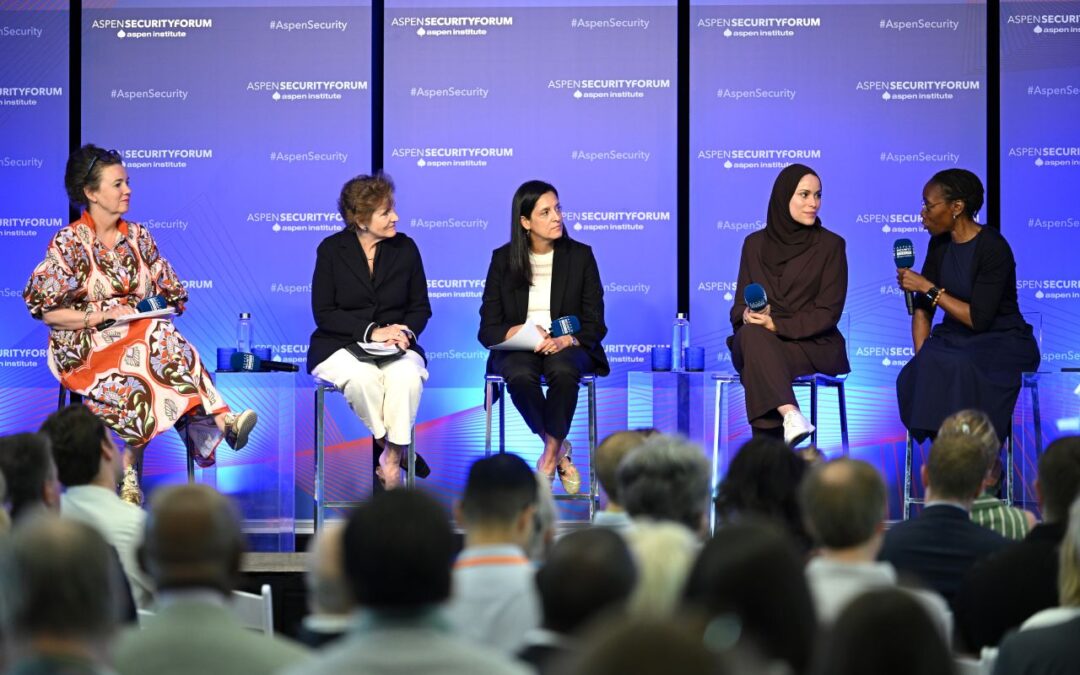
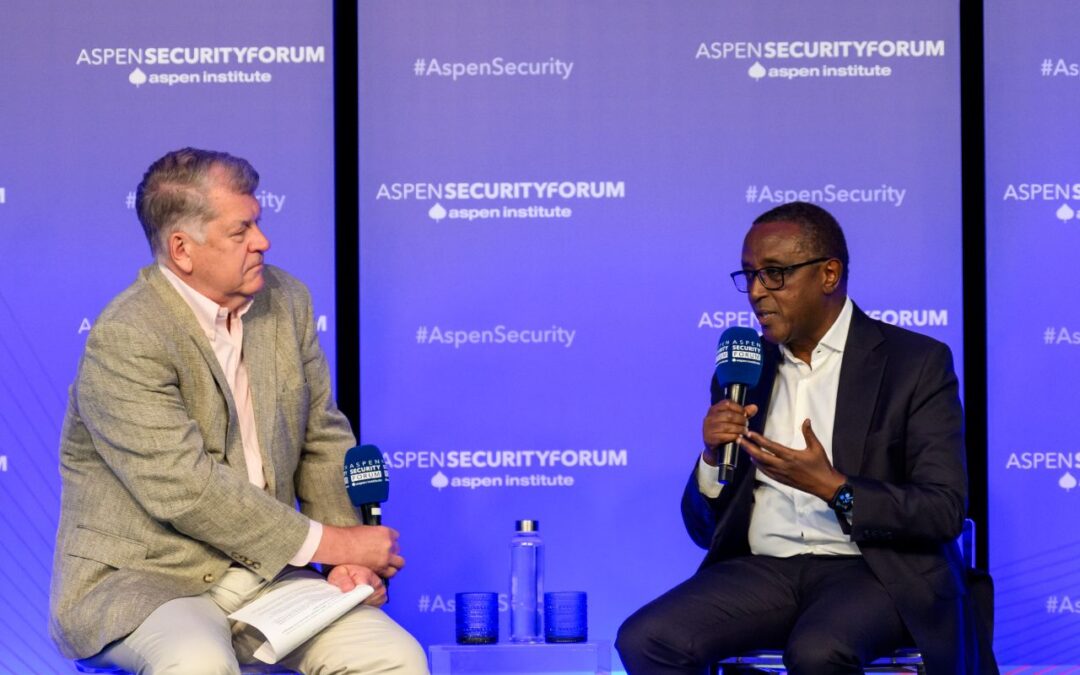
Speakers
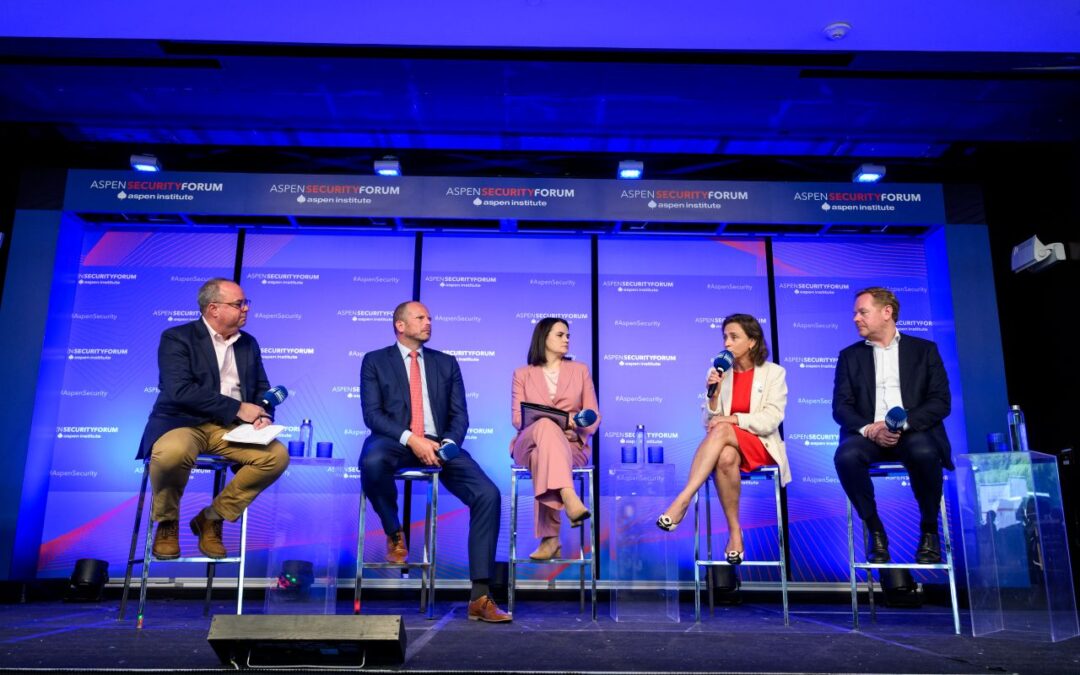
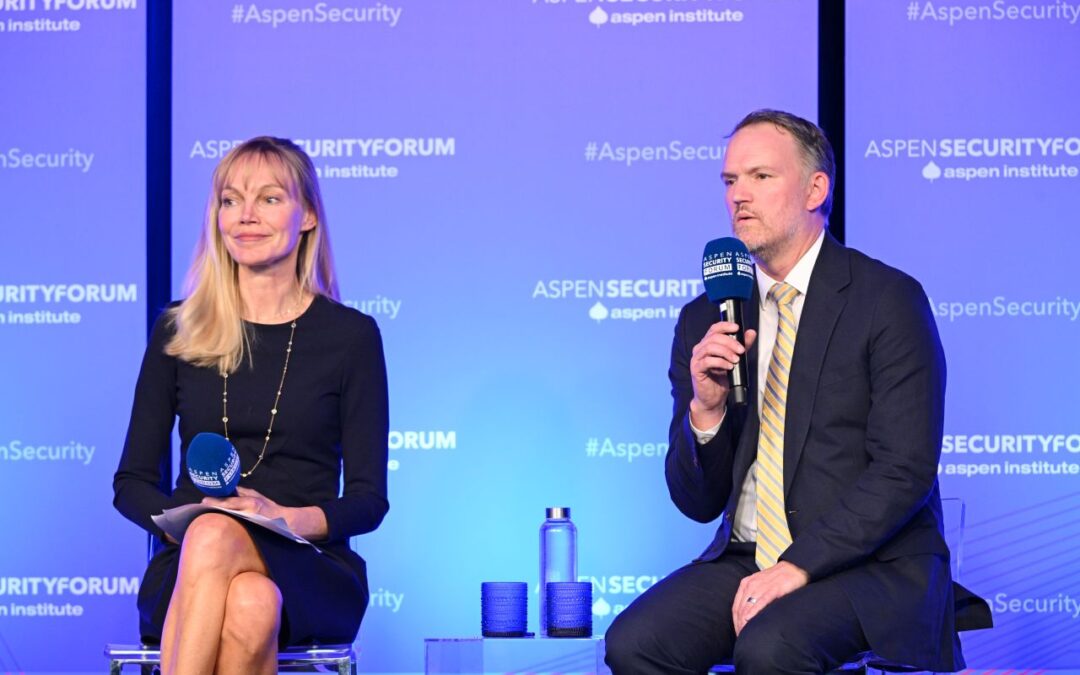
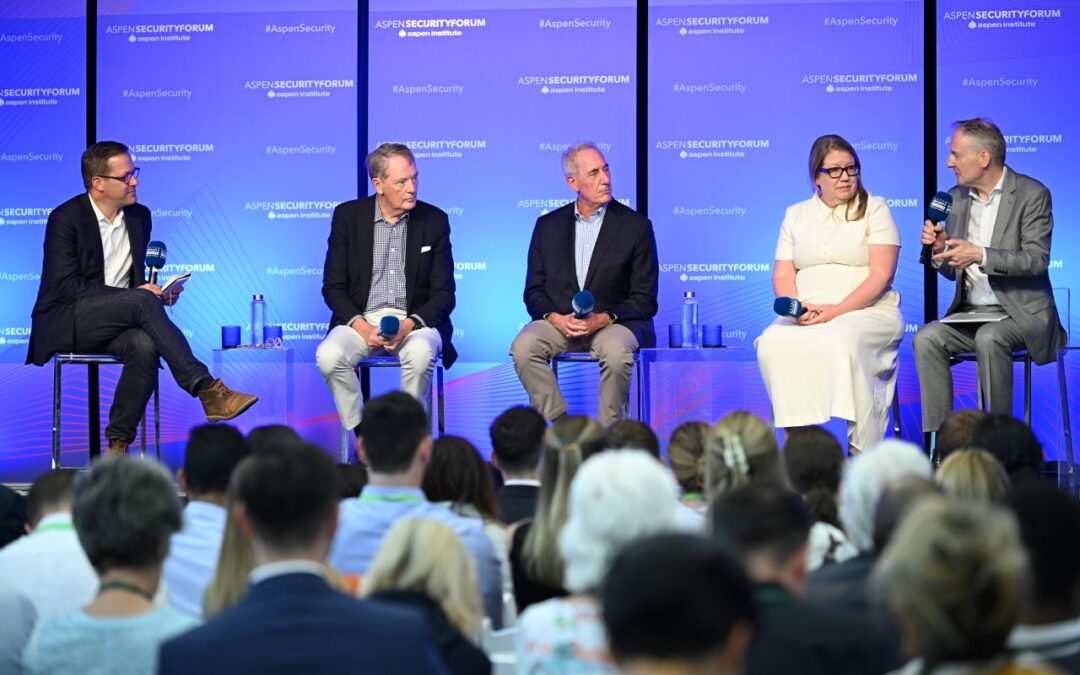
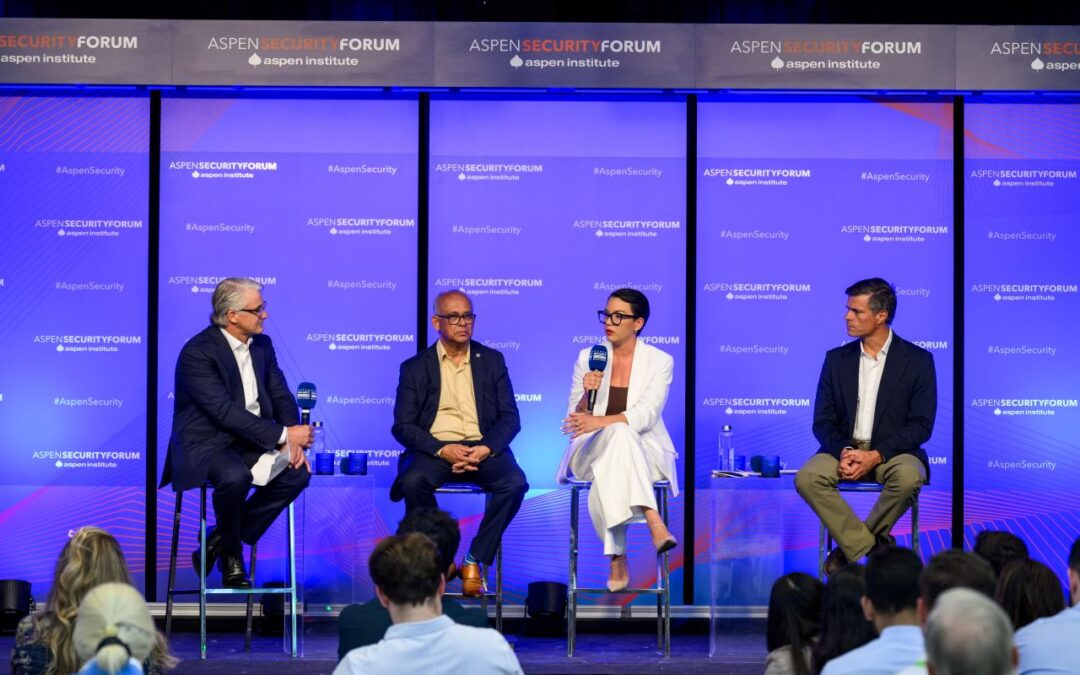
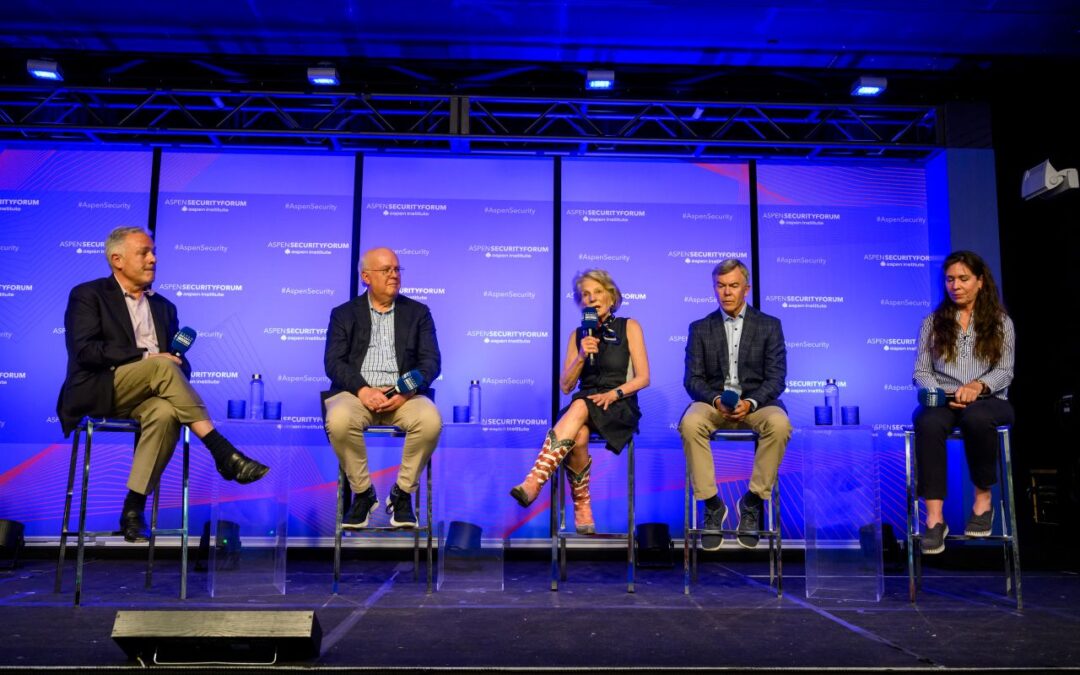
Tristan Aureau, Director, Centre for Analysis, Planning, and Strategy, Ministry for Europe and Foreign Affairs, France
Alejandro Cainzos, Head of Unit for External Economic Policy, Secretariat-General of the European Commission
Kersti Kaljulaid, Former President, Estonia
Robert Kupiecki, National Security Advisor to the Prime Minister, Undersecretary of State, Poland
Oliver Linz, Director of Policy Planning, Federal Foreign Office, Germany
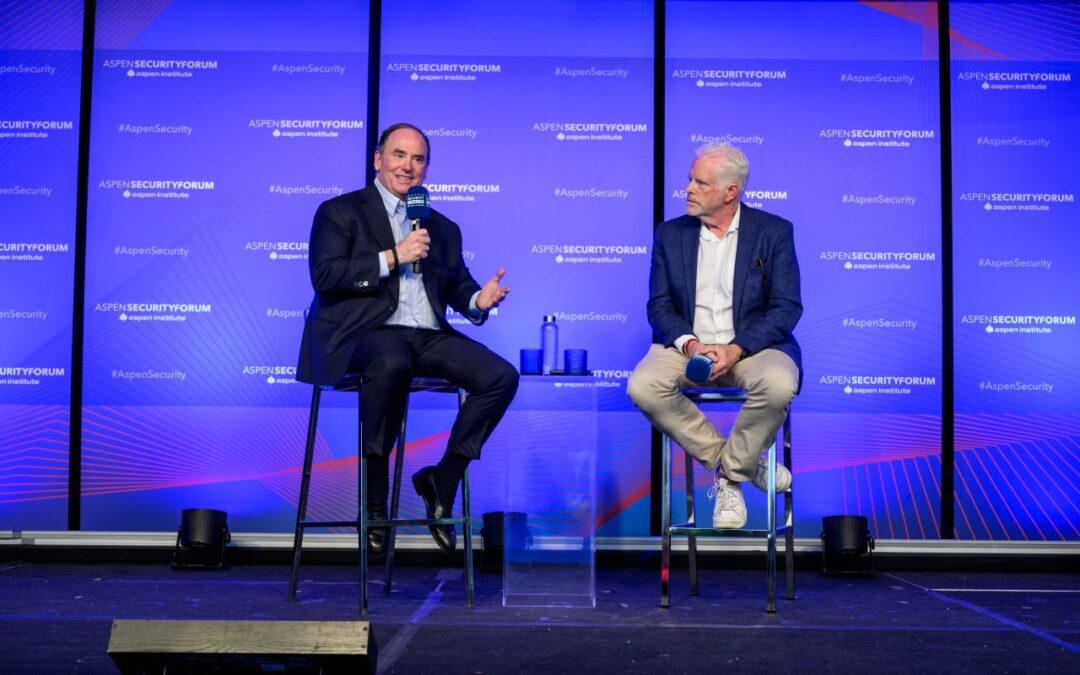
Moderator: Peter Spiegel, The Washington Post
Full Transcript
Read the full transcript below or download it to your device.
Click to read the full transcript
Spiegel
I must say I don’t think I’ve ever seen anyone out-talk Susan Glasser before, so maybe it’s a good sign on Ukrainian persistence that we could take away from this. Thank you Niamh very much. It is indeed my great pleasure to be up here on stage with some distinguished European leaders like Nick and like Susan. I think I probably have to get right into it, because we don’t have much time. And also like Nick and like Susan, I think I have to start with the National Security Strategy, Tristan, why don’t I start with you? Because I’d like to start the conversation in a slightly different way, because I would say President Macron, him specifically, but frankly, France, more generally, has in many ways been the most loud advocate for Europe, for lack of a better word, standing on its own two feet, without the United States frequently. In some ways, the National Security Strategy can say, is a call to arms for Europe to do exactly that. Take that as a launching off point and answer me two questions. One, do you see it as that? And two, where is Europe in terms of capabilities gap, in terms of ability to stand on its own? Where are we in this process that it would be able to tomorrow, in a week, in six months, to actually not rely on the United States for its own security purposes?
Aureau
Well, thank you very much, Peter for that question. It’s indeed been the case that since 2017 I mean, President Macron has been pretty loudly advocating for strategic autonomy, as we first put it, over the years, if we look back at the past eight years, we’ve evolved into moving to another concept of European sovereignty, and this was to also dispel misunderstandings with other European partners, but also U.S. friends who actually thought that strategic autonomy was somehow something that would go, let’s say, suspiciously, against the US, when it was actually not the idea. The idea was to work together with partners whenever possible, and actually to be able to work on our own capacities whenever necessary. And I think if you look at what happened the past few years. This line that we’ve been pushing pretty hard in the French system has become something of a more of a European approach. And to testify from it, I spent many years working in the European Council, and I remember in 2022 actually, a few months after the war of aggression by Russia against Ukraine, we had a European Council in Versailles, where basically all European leaders agreed on an agenda that aimed at reducing strategic dependencies, strengthening our economic base and further building our defense capacities. And this is not any more, you know, sort of a French idea, that’s become something that all European leaders were supporting. Now coming back to the national security strategy, I think if I have to be very clear and short on this, I think it’s a clear call for us to accelerate much more. That’s how I would see it. It’s the case on defense, where it’s been said on previous panels that actually a lot of things happened in the past three years. Is it enough? Certainly not. Should we go further? Certainly Yes. And the speed is of the essence. So a couple of points on sovereignty and what that means, because it’s actually a concept that is, and rightly so, at the very heart of the national security strategy. And you know, from a European perspective, sovereignty is about, you know, our autonomy of decision making, designing our own, you know, regulations, digital services, for instance, it’s about, you know, preventing interference wherever they’re coming from in Europe. That’s also an important point. And I think now there is no opposition between the idea that we should build our capacities as sovereign nations, but also as a sovereign Europe. And I think that European public opinions are very much convinced that it’s at European level that we are actually becoming more sovereign. And all of this, as you said, is part of the US asking for the Europeans to do more, and I think that we’re very much doing so. It’s the case with Ukraine, where we’re stepping up, you know, financial support. It’s the case when it comes to our defense capacities. And we just have to do more, and it’s a matter of efficiency to do it at 27 but also in smaller formats. And France is certainly playing that part. And final word here, speaking in DC, I mean, all of this agenda is certainly something that’s coherent with participating in the stronger alliance within NATO and France is playing its part also in strengthening, you know, the eastern flank, be it in Romania, be it in the Baltic states, be it in the Baltic central operation. In all of this, we want to do our part. And I think that’s very much the line we’re pushing at the moment.
Spiegel
Let me follow up on something you said, because you talked about working on this at 27 you talked about a sovereign Europe. One of the jobs you had before you moved back to France from Brussels, is you worked with Michel Barnier on Brexit. And it is, I think, without a doubt, no one would dispute that Britain does have one of the, not the most capable militaries in Europe. How does a Europe at 27 trying to work sovereignly work with Britain given the dangers it faces?
Aureau
Thank you very much for making that point. It’s a very important one, and it’s pretty personal, because I was the diplomatic adviser to Michel Barnier during Brexit negotiations. And I’m actually very pleased to see that now, five years after the end of Brexit negotiations, we are, when I say we also, from a French perspective, working very hard with our British colleagues in France within the coalition of the willing, as we call it, you know, closely on the question of security guarantees to be provided to Ukraine. And certainly it’s not only at 27 and the UK is certainly an absolute key player when it comes to the security of the continent. So we want to engage with them in that coalition. We’re also working with Turkey, which is an important NATO player, and is certainly an important security player on the continent. So that’s why I say now, at that time of transition, as was said by Mr. Shmyhal, in this moment where we have to prove efficiency and speed, we have to be very agile in using different formats. And you know, we’ve been working very intensely with our German counterparts, with Polish counterparts, and all European partners. And it’s all a matter of speed and efficiency. And actually, that requires a lot of flexibility on the formats. And working with the UK in this respect is a no brainer. It has to be done, and that’s what we’re doing.
Spiegel
Oliver, if I could turn to you from a German perspective and get back to the National Security Strategy, because I read it again last night, and it is a remarkable document, particularly when it comes to Europe. And let me ask you this a bit more provocatively then, because if you read it on its face, what it seems to be the foreign policy goal of the United States is to directly evolve itself in the domestic politics of Europe, and the place we’ve seen that, frankly, most obviously, has been in Germany. We’ve seen the Vice President reach out to some of the far right Alternative for Deutschland Party and whatnot. Can I ask as you read this document, can you still look at the United States and see a reliable ally?
Linz
Yes, of course I can. And I can assure you. I can assure our partners and friends that we have got a vivid, diverse and hard, lively discussions in Germany about political things. I can assure you that the conditional order in Germany is in order, and part of this conditional order is the proactive fight against extremism on the right and from the left. And part of it are laws against hatred speech. Part of it is the law against so-called Volksverhetzung, fantastic German word. It means incitement to hatred. And we are, we are very keen to do it, and we do it every day, and we are very thankful for our Western allies, especially you the United States, that after the Second World War, they brought to us the four D’s, demilitarization, de montage, democratization and denatification, and they brought us up as democratic toddlers in this times. And now we saw the reason for it, and we are very thankful and as a civil, civil servant of the Foreign Office, and someone who was part of the federal armed forces, and so I call myself a German patriot, and I’m very thankful for this lesson for Germany. And this is part of our Constitution. It’s part of our constitutional fabric, and we need it as other European countries, because we discovered what happens when extremism is not fought against.
Spiegel
Let me ask you the sort of same question I asked Tristan, which is the ability, or, frankly, the desire, for Europe to prepare for its own security on its own, without the US. Now, the dynamic over the years has been larger. This has been a seen as a French project, but with the Germans only going on slightly more reluctantly, a bit more transatlantic, depending on the government of the day. What is the thinking now in the mass government about the need for Europe to prepare for all contingencies on its own, without the US, or is that not part of the thinking process?
Linz
Now, first of all, maybe it’s not unusual and not unsuspected that as a nation who has got more than, I think, 20 to 30,000 American soldiers on our soil that we are very interested in the connection to the United States, and we Germans see we need the US for the defense of Europe, especially for the next years, to strengthen up our own capabilities. And if you look at us, we are the symbolic European pillar of NATO. We are many, but we are not strong enough now. So we have to have time. And the United States, it would be good that the United States will give us more time to strengthen up our defense, to increase what we do there and but in the German view, there could be no NATO without the United States, especially when, when it comes to the nuclear umbrella and other questions. We, in our view, we need the United States also in the future, of course.
Spiegel
Let me turn to the eastern flank and start with you, Madam President. I was in Brussels for the 2014 little green men incident, and I remember very distinctly talking to leaders in the Baltic states, and when they hear my American accent, they immediately say, Article Five. Do you really think the Americans will show up if we are attacked? Given that you are, for lack of better word, a better word, a frontline state. Now, if I were to ask you that question, does Article Five still hold and are you still able to rely on the United States, given what is in that security strategy? But how would you answer that?
Kaljulaid
Frankly speaking, yes. But of course, our risks have been, let’s say, balanced in a different way. The question will we fight these unnecessary in Estonian NATO forces. There are French Brits, there are Americans on ground. And actually, our law space is set up this way, and NATO is fully aware of that, that if any Estonian unit comes under Russian attack, doesn’t even take the President’s Parliament’s Minister of Defense’s order. If they find themselves under Russian attack, they have the right to fight back, and they would do it together with the Allied Forces. Actually, it’s automated, so I’m pretty confident, and I’m also much more comfortable today when I think about the security of the Northeast rank of NATO, because first, northeast rank of NATO speaker now than it was before. Second, nobody in Europe is arguing anymore that Russia is a threat. It’s, of course, ironic that now you have to argue about that somewhere else, but in Europe, we don’t have to argue about that. And this question about, will Europe be able to handle all these challenges as just thinking when you were talking, Charles de Gaulle managed to, I mean, cooperate with the Brits during the Second World War. He didn’t have any standing, and he didn’t speak English, and he managed. So how on earth can you imagine that nowadays, after having exercised for decades, sitting behind the same table, we’re not able to. Also, if you look, I mean, if we had faced them, let’s let’s be honest, less existential crisis by, for example, ESM was created out of the financial crisis for Europe and, you know, I joke now to my European counterparts that never mind if you spend now less than we do, because we will spend 5.4% next year already on our defense from GDP. Doesn’t matter, because if we get ourselves into the fiscal trouble because of overspending on defense, then anyway you have to pay. You just have to do it through ESM, which is more difficult to explain to your own citizens than simply doing fast forward on your own defense spending. It will happen anyway, your choice. I mean, whether the or the kind of a convoluted way it will happen. And I’m very proud of what we have been doing together. And indeed, maybe it’s difficult to appreciate here, but there is value in European countries coming from different angles to this problem. There are big words of President Macron, there is a big spending capacity of Germany. There is Danish army, which is procuring at the lightning speed wasn’t the case before. That is Swedish economy, which is very much thinking of dual use and has a capability to do that. There are the Fins who have been doing and preparing for total defense while pretending to be on good relations with Soviets and the economically benefiting from that. There are Poles who have good eyes to look into the territory of our way, I would still call enemy, not even adversary. And so we’re all different. There are Poles. I mean, who are the biggest centralist in the European army? I mean, we come from different angles, and we have all angles covered, therefore, so frankly speaking, I am much more safe sitting in NATO’s Eastern flank than I felt three years ago.
Spiegel
That’s good to hear. Can I ask again? Maybe, maybe it’s a source of your optimism. But about this concept of a capabilities gap, and he mentioned the obvious one, which the Americans provide the nuclear umbrella. As you look at the Estonian defense budget, or European defense budget, where are the key capability gaps you think that exist if Europe was to actually be forced to rely, to defend itself without the United States? I mean, people talk quite frequently in the Ukraine war about intelligence assets Ukraine rely very heavily on American intelligence assets that Europe cannot necessarily replace that. Where do you see the critical capabilities gap that Europe would have to fill if it was not able to rely on the US?
Kaljulaid
Well, the capability gap is the ability to build and the ability to finance. I mean, this is as simple as such. And to be fair, also here, I mean, there is no such thing I mean, ample capability to procure from this country. We tried with one system. We were told to get it in 2033 we went to Koreans, obviously. I mean, so basically, we all have to fulfill this kind of production gaps, which, which we all have. The trick, of course, is nowadays that previously you knew what you will need in 10 years time. Today, only Ukrainians know what we need next month. So basically, if I come to think about the biggest gap, actually, is the innovation gap, and then, therefore, I think it is very counterproductive not to have Ukrainian army in NATO army. It would be our strongest capability to involve Ukrainians and discuss what will Europeans do if 700 drones hit Europe one night? And the logical answer is, we turn to Ukrainians. Having them therefore in NATO is an added layer of security to Europe.
Spiegel
Robert, for this reason, I potentially saved you for last because I will say that the Prime Minister Tusk probably has been, well, let me say this. I’ll say it anyway. You disagree with me. I think he’s been the most outspoken of any European leader in openly criticizing what the Trump administration is putting out there over the last few weeks. Seems to have, I think, like many of us, not recognize the rhetoric coming out of Washington, given, not only close American-Polish ties over decades, but the fact that there was a huge Polish American contingency in the US that’s very important politically, that Trump seems to be ignoring. Is that a fair statement? Do you see Tusk, particularly as, as the President said, as the largest military on the Eastern flank, playing a leading role in pushing back on the US and trying to get the US back into a more pro-European or anti-Russian or pro-Ukrainian, however you want to determine a place going forward?
Kupiecki
I don’t think I can find, I would say a second transatlantic leader, a strong transatlantic voice like Prime Minister Tusk in Poland. So obviously, the debate about the transatlantic relations, the rhetorics and, let’s say predictability, of the US foreign policy regarding Europe, is an active topic, a hot topic, debated in Poland, and it is also debated in Europe. But if you look back, I’d say to the last eight years, you can hardly point to a larger, to a greater foreign policy success of the United States at Europe following the end of the of the Second World War, it was the rehabilitation and political and economic reconstruction following the end of the Cold War, outside the NATO enlargement and the European Union enlargement. And obviously the United States was present in all those processes. And without the US support, those processes would have been more difficult. The new National Security Strategy for Prime Minister Tusk, for us in Poland and for us in Europe, is unsurprisingly surprising. I would, I would say, because it is, let’s say nothing more and nothing less, but the qualification of what has been said publicly in the United States about foreign policy, about the priorities. What is surprising in this strategy? It is perhaps the most surprising in the strategy, it is that the source of the major threat for Europe is not, I’d say, openly imagined, and this is definitely Russia. We are not surprised that national security interests have been stipulated and that America goes after its national interest. But we think that there is also a great ground for Europe and for the United States, I’d say, to have a thorough debate about how to jointly, I’ll say address the issues and address the concerns over the last over the past couple of days, I think those were mostly the commentators and the think tank debating actively national security strategy. The governments and the officials were rather silent, because the time for diplomacy and the time for political discussion will come on the national security strategy. And I think all of us present in Washington, DC, and today for this conference, we’ll have our outreach to the US administration, and we’ll have, I think, the first series of conversation on that.
Spiegel
Let me push back a little bit on your answer, if you don’t mind, because you said it’s unsurprisingly surprising. But I think you said surprisingly unsurprising. I mean, I think you read most of the national security strategy. It is very, I don’t say traditional, but it certainly is very America first. When you get to the Europe section, it seems to take to veer off, quite surprisingly, it doesn’t mention Russia as the primary rival there. It mentions, actually, European liberalism, for lack of a better word, as the primary threat. And I don’t think there’s any government right now in Europe that faces a more tense domestic political situation than the Tusk government, because the President is from a, shall we say, a nationalist right wing party. There’s huge tension between those parties within Poland right now, are you at all concerned that the United States is simply putting its finger on the scale of a domestic political situation in Poland? That is, that is the primary goal of US foreign policy in Europe? Because it seems to be what it says.
Kupiecki
Well, the political polarization in Poland and political polarization in Europe overall is a fact, and that’s such that nobody’s going to discuss it. And there are political forces in Europe and the United States talking to each other to what extent it may translate itself to a governmental to the policy of the administration it is to be seen. But I think that the health of our democracy, the strength of our democracy, the health of our and the outside, the state of resilience of the Polish politics and obviously the societal response to the political impulses is sufficiently robust so that any kind of external pressure can be, say, somewhat suppressed.
Spiegel
Kersti, you want to jump in?
Kaljulaid
I have been listening now for more than an hour asking. I mean, everybody’s asking, the European people to dissect this text, that’s not our job. I’m sorry. I mean, frankly speaking, our job is to answer the question, What will we do now? Or what are we doing? And for me, the answer is, nothing changes. We still need to spend. We need to, I mean, make sure that we shorten the window when we are not defended, not protected. We still need to, I mean, resolve the issue of Ukraine in a way which is sustainable. Because, you know, I mean, it’s very easy to move fast and break things and in economy, I really like that, I mean, I really enjoy that. But I mean, thinking of the balances of power, wouldn’t it be the saddest thing on this earth, if, after all these fighting, all these dying in Ukraine, all this money we’ve spent on it, that will be an uneasy peace, which will cause political cost in Ukraine, and it will be extremely easy then for Russians to grab a candidate for presidency, Yanikovich style, who will then deliver Ukraine whole and occupied to Russia without us or anybody can do anything about it, because no shots anymore are fired, all these years gone to waste, and the risk of that happening I think is what should make us all move together. I think at the end of the day, whichever text we look at, we will understand that. There is no getting away from that.
Spiegel
That is a very helpful transition to what I want to raise with Alejandro. Alejandro, the President says the question is not how we dissect the National Security Strategy, but what we are doing, and your portfolio at the commission is much more economic. And I want to focus specifically on energy security, because when it comes to economics, this is clearly an area where Europe struggled, particularly in the after 2014 but also obviously, in the immediate aftermath of the more recent invasion. In many ways. You know, the Central and Eastern European countries are the most exposed pipelines going the wrong way. You know, big infrastructure having been built. But it’s not just central and eastern in Europe. There’s there’s connectors that have to be done in Spain and France, a huge once again, reliant to the United States for imports of natural gas and other supplies and prices, and yet, prices in Germany and elsewhere are still incredibly high, to a point that much of European industry remains uncompetitive. We’ve heard the driving report and whatnot. To what extent is foreign policy in the Russia-Ukraine war and the questions of the United States as a reliable ally impacting issues of energy security and more broadly, the economic slowdown, for lack of a better word, in Europe right now?
Cainzos
I think I would start with what the President ended right. We need to do we for ourselves, not because someone asked us, not because someone pressure us. I think we’ve learned really hard lessons here. There’s no denying that our dependency on Russian gas has been a fundamental source of weakness for us, and we’ve paid a high price that we keep on paying. Nevertheless, it’s also a positive story, because it shows what we can do as Europeans when we act determined and we act together. We’ve gone from a situation where in 2022 we’re importing around $145 billion worth of gas per year from Russia to a situation where this year we’ve imported in the first half, around 10 billion, and we now have a legally binding agreement to reduce that to zero by 2027. This is remarkable. I mean, there’s never been, I think, in the history of Europe, certainly, such a fundamental economic shift in such a short period of time. Of course, this comes with cost and this is something which I think the commission has through repower EU made remarkable progress. The prices, of course, spiked right after the beginning of the war in Ukraine. We now have a situation where a number of member states have reached prices lower than where the low started when the war started. Of course, not the case for all member states, but the investments are coming. The investments are coming. I think the purchases of LNG from the United States has been a source of stabilization and has helped stabilize the price. We’re now importing around 200 billion euros worth of LNG, worth of energy rather, so that includes nuclear, from the United States, which is, by the way, part of the EU US trade agreement, as you will know. And that has helped stabilize. But in the long term, the trajectory here is energy security through more independence. That means nuclear, that means renewables, because we’re not a fossil fuel rich continent. And if you look at where we are now, it is the member states that have larger share of those kinds of energies, which has which have the lower prices. The other aspect of that is that we cannot substitute one dependency with another. And we have seen in October of this year how the export restrictions of critical minerals from China threaten to put European industry to a halt, including, by the way, on renewable energies. So here, what we’ve done is to accelerate our strategy, to use Tristan’s word accelerate, accelerate, accelerate. We’ve published a new action plan called Resource EU, with a financial backing of about 3 billion euros per year, with the objective to reduce our dependency on Chinese critical minerals between 30 to 50% by 2029 through 29 specific projects. And by the way, this is an area where we’re in active talks with the US administration. We think we can cooperate to get there faster together.
Spiegel
Can I press you though on this? Because you mentioned nuclear, which obviously one very large member state not represented on the panel, is moving away from, you mentioned renewables. Again, we saw prices spike after it was announced. We’ve seen tractors and from, from Belgian farmers who are opposed to this. Is there political support Europe wide now to accelerate towards renewables at a time when energy prices are high and clearly impacting cost of living Europe-wide?
Cainzos
I think there is a growing understanding, and that comes back to Tristian’s definition of sovereignty, that if we want to be able to take on our own decisions, we need to reduce our dependencies. And if we’re going to be able to assert ourselves on the global stage, we cannot be depending on one single source of energy for our economy to prosper. So that means that, of course, there is a cost, of course it includes political difficulties, but getting there is of strategic importance. And I think there is consensus in Europe about this.
Spiegel
Did you want to jump in on this?
Kaljulaid
I’m sorry I once managed the power plant in Estonia, which all the capital of Tallinn. And frankly speaking, renewables or non renewables, the problem of Europeans has been that since we created and opened the energy market, since we’ve had then government invested in power production capabilities, we have been creating that market essentially on variable cost only. And all these plants now are undown. So whether you invest green, brown, black, doesn’t matter. You have to do your capex. And Europeans have not the habit to pay for capex through energy market, and there is one way out of it, by restoring the market, but making sure that the shock of price is not too high for that. And this is rising the energy subsidies of European Union at the common ground, like in Common Agricultural Policy, you cannot subsidize from your own budget. Even French, can’t. They sometimes try. I audited it once and it wasn’t too good. But anyway, nobody can, and it’s all on European level, and then you will have a free energy market within the European Union. We can all compete for that. We can all create renewables, nuclear, stuff like that. Because if we are able to recreate the common energy market, we will not get this investment done. If we say, that’s the market, we will not subsidize. We will have riots, because copex has to be paid for. So I think that is kind of an intermediate solution, which would be best for Europe, and put down the pressure from outside, as heaven knows, we might actually achieve it. Previously, I wasn’t too optimistic.
Spiegel
Well, I spent many years in Brussels listening to that same argument. There was no movement on it. Perhaps the outside actors will now move on with the last about 10 minutes we have. I want to try to talk a bit more about more recent events. And Tristan, I’m gonna start with you again. Obviously President Macron, along with, with Chancellor Mertz, was in London recently with President Zelensky to try to come up with some sort of counter proposal to the very Russian leaning peace proposal that President Trump has put forward. Give me your sense of where those talks are, and if you can’t get into specifics, maybe more on the process. Because clearly, what is the leverage the US has over Ukraine is weaponry, and its ability to use its assets, not only armed, but obviously intelligence assets, that is helping Ukraine in the war right now. Can Europe and Ukraine go it alone diplomatically, if the United States has this leverage of intelligence and military wherewithal? So two part question, I guess, where do you think the talks are right now, and what’s the way forward?
Aureau
Well, this is very much an ongoing process, and no later than two hours ago, there was a call between President Trump, President Macron, Chancellor Mertz, and Prime Minister Tusk, and Prime Minister Starmer. So all of this is happening, so I can’t get into the specifics. This is a very fluid situation. What I can say, though, is one, there’s no idea to go alone, but actually to support U.S. efforts, work and engage strongly, as strongly as possible, with the US administration. That’s one. Second, as long as it’s about Ukraine and European security interests. Actually, the Ukrainian and European point of views are, you know, featuring into the discussion, and this is what we’re doing. It’s been said by Minister Shmyhal already. What’s the Ukrainian view you know, when it comes to territories? It’s been said very clearly when it comes to at the front line. I mean, this is a Ukrainian point. On the European side, there are elements that are directly related to our core European security interests. And you know, when we had this 28 point plan, there were elements in it which were directly affecting European core security interests. So basically, it’s for Europeans to get into that conversation and convey what they think about those points, and just a point, because you referred, and rightly so, to leverage that the US has, and of course, the US, and that’s why we’re supporting their efforts, are playing a major role, but the Europeans as well are having elements and cards, if you wish, that are pretty significant in terms of financial support, in terms of sanctions, in terms of, you know, providing equipments, in terms of supporting Ukraine, politically, on all of these elements Europe has leveraged. The idea is not to use it alone, but in a complementary manner to what the US is doing to actually go in a direction that we consider goes, you know, in favor of our security interests. So that’s, that’s how I would, I would frame it. And basically our thinking, and then deep down, is basically that on the Ukrainian side, the Ukrainians have been agreeing to, you know, an unconditional cease fire along the front line for months now. What is happening is actually the Russian side not making any sort of concessions, sending hundreds of drones over Kiev every night, bombarding energy infrastructures, pushing like, you know, on the front line. There are no concessions on the ground, and asking all of Donbas is certainly not a concession in a negotiation.
Spiegel
I realize we’re about out of time, and Robert has a hard stop right at the top of the hour. So I guess what I’m going to do is when I just go down the row and ask your views on very similar to the question I threw at Tristan. Let me phrase it slightly differently so I can give you guys a chance to have a quick, quick answer. All of you here in Washington, this debate is obviously ongoing, not only within the administration, but on Capitol Hill. If you have one message that you want to convey to the administration as we negotiate on Russia Ukraine, what would that message be? Robert, I want to start with you.
Kupiecki
First and foremost, together, we are stronger. Second, we need to properly, actually recognize the threat, the shorter one for Ukraine, and obviously the long term threat. If Russia obviously plans to continue the aggression or renew the hostilities against Ukraine, and to go and to go further, the potentials of the United States and Europe, taken together, are unmatched by any, I’ll say, competitor, to the to the United States and to the to the Europeans, the possible Alliance, or the, I would say, strengthening alliance, alliance between Russia and China, which increases the potential of Russia and fuels, actually, with non lethal support the war machine of Russia. This is also of concern to the United States, and obviously it is also an issue that we can also work together with the United States in the future.
Spiegel
Kersti?
Kaljulaid
Well, I don’t know why, but humankind is constructed this way that all autocrats one day overestimate their economic might and try to turn it into a geopolitical power. Unfortunately, it has never gone without happening. It always does happen. And you may try to, I mean, throw a few Donbasses down their throat and hope that it will placate them. Or you may try to, I mean, trade away your differences. We in Europe have tried that with Russia quite a lot, and I think opening up for China had exactly the same kind of thinking behind it. And here we sit, several decades later, discussing the same thing. So please, let’s remember this. All autocracies will one day go to war because they are not bound by the public opinion or the citizens. Democracies will always win these wars because we have something to defend: our freedoms and our values. But it would be best if we could avoid this cycle. Let’s try to be smart enough this time. Thank you.
Spiegel
It would be best. Oliver?
Linz
A quick deal is not always the best deal.
Spiegel
Very good. Alejandro, the same question, but ask you in a slightly different way, since you were sort of the representative of the institutions here on the stage, one of the things that Nick raised was that the National Security Strategy seems to view the European institutions as something that threatens sovereignty, threatens the West, threatens civilization. Let me ask you your message to the US, not necessarily on Russia, Ukraine, though please weigh in if you want, but on that issue in particular. The European project that is called in Brussels, and actually the US has a role in helping, in some ways, encourage and foster that seems to be going the other direction. What will be your message for the administration on the role that the European institutions and Europe at large play in the current geopolitical space?
Linz
The EU is your partner, not your problem. The stronger the EU is, the stronger we can both be in making sure that in the current year and economic environment, we achieve outcomes that better serve our interests, which are immensely aligned.
Spiegel
Let me join you and thank you, and a round of applause for our panel. Thank you.