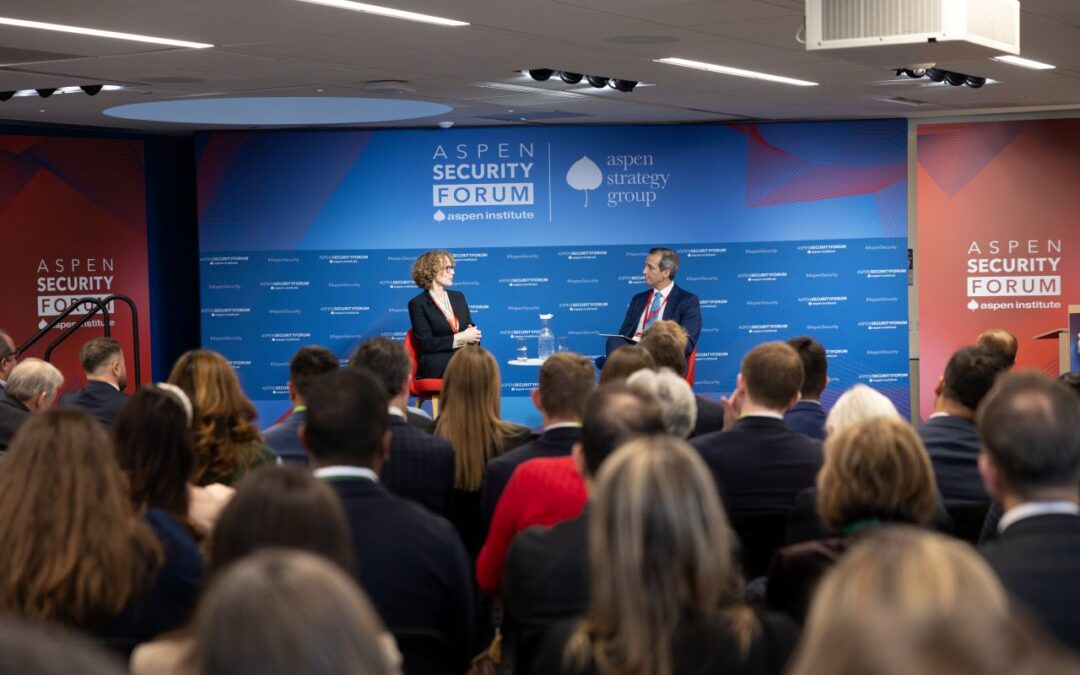
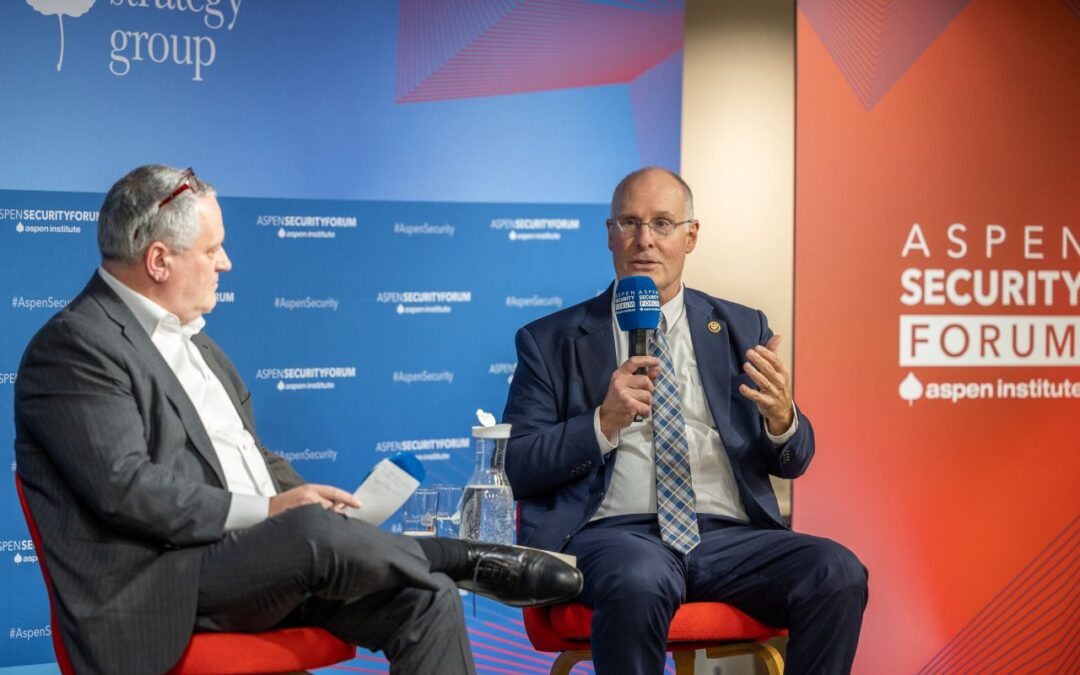
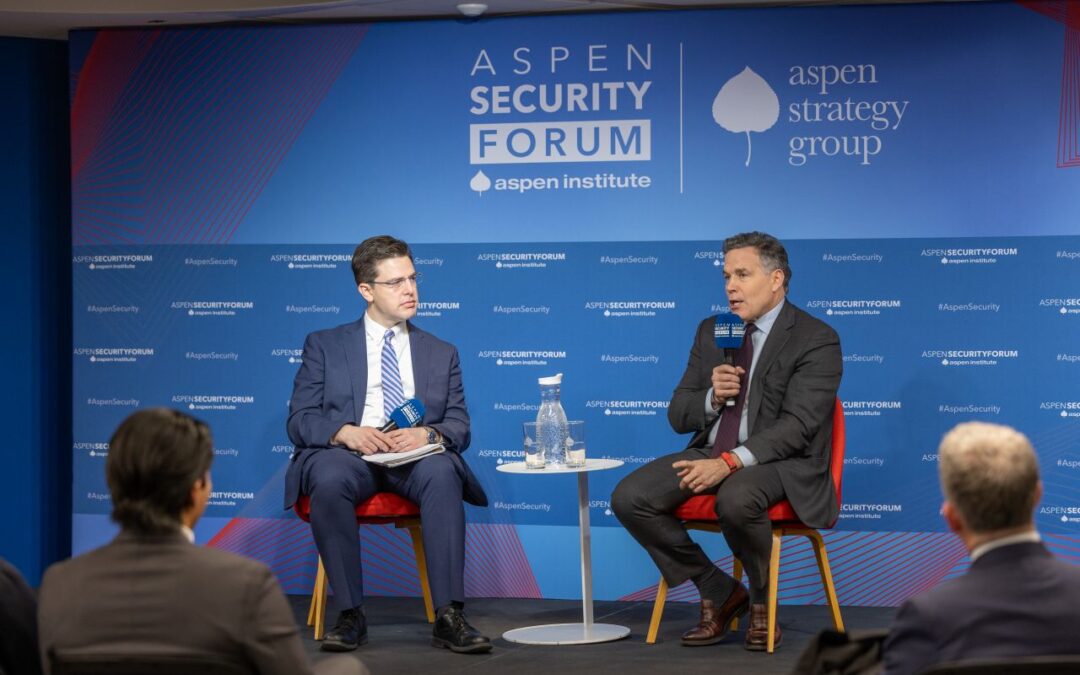
Speakers
General Charles Q. Brown, Chief of Staff of the Air Force, U.S. Air Force
Moderator: Courtney Kube, Pentagon Correspondent, NBC News
Full Transcript
Read the full transcript below or download it to your device.
Click to read the full transcript
Bernadette Stout, Partner, McKinsey & Company
Hello, attendees the office, we are privileged to serve as a long standing supporter of the Aspen security forum, and believe this event is important to promote dialogue on the leading issues of today, including economic security, sustainability, and inclusion. Today I have the high honor and privilege of introducing the esteemed guest and Keynote General Charles Q. Brown Jr, who has dedicated his entire life to a career of public service as a command pilot, he amassed more than 2900 hours across numerous airframes and in combat. And his experience commanding the Pacific Air Forces lends enormous credibility to his depth of understanding of the complexity of the challenges we face today. In June 2020, General Brown was unanimously confirmed by the Senate as the Air Force’s Chief of Staff, making history as the first African American to lead a US military service. His accelerate change or lose plan is not just a coalescing vision across the Air Force. It’s a call to action to empower almost 700,000 airmen to respond to the challenges ahead. As a member of the Joint Chiefs General Brown is leading the Air Force through its 75th anniversary and accelerating the change necessary to meet the challenges of today and long into the future. On behalf of our firm. Please join me in welcoming the 22nd Chief of Staff of the Air Force General CQ Brown.
Kube 1:52
Hello, I’m Courtney qB. I’m the Pentagon correspondent for NBC News. I’m honored to be up here today. I have about 9000 questions for General Brown, so I want to get right to it because I sort of wiped the vision of David Sanger on dancing on tick tock out of my head, then we’re gonna get started. General, thank you for being here. I want to start with a little bit of news that you made on the flight out here with our colleague Phil Stewart from Reuters. You said that it’s possible that the US and some allies may begin training some Ukrainian Air Force pilots. So the question is, what platform would you potentially the US potentially train them on? And would this mean the US might sell them say FF, teams of six teams?
Gen. Brown 2:33
Well, first of all, it’s a pleasure to be here. I think what I said yesterday, wasn’t necessarily making news is actually highlighting some things you’re already doing. What I would offer to you is the aspect that for the past 25 plus years, the US military, particularly with our state partnership program has been working with Ukrainians, which is actually why they’re fairly successful in the things they’re doing in our conflict against Russia. I can’t speculate what aircraft that they may go to. But I do believe that we have an aspect and responsibility like we do with all our allies and partners to be prepared to train them in various capabilities and capacities. And so, as the Air Force Chief of Staff, I often think about how we organize training flip for ourselves. After spending last week in Europe, with 67, or my friends, an event sponsored by the Royal Air Force, we had a lot of time to talk about how we trained together for our common defense, and it’s no different with Ukraine. And so part of this is understanding where Ukraine wants to go and how we meet them where they are, and then look at capabilities not only from the United States, many of our allies and partners have an interest in ensuring that Ukraine can provide for its own security.
Kube 3:44
But presumably, we wouldn’t be talking about MiGs because the US doesn’t and that’s what we’ve heard a lot about from the Ukrainian Air Force doing it so it’s, it is possible the US could sell or provide Ukraine with some US fighter platforms and you think that’s that’s possible going forward?
Gen. Brown 3:58
There’s us there’s gripping out of Sweden, there’s the Euro fighter, there’s a Raphael so there’s, there’s a number of different platforms that could could go to Ukraine. Let me not mix I think it’d be tougher to get parts in the future from the Russians, so I it’ll be something non Russian. I could probably tell you that. But I can’t tell you exactly what it’s gonna be.
Kube 4:23
Bernadette talked a little bit about your your extensive background with the Air Force in March of 2014. You were the director became the Director of Operations strategic deterrence, and nuclear integration, a US Air Force’s Europe in Germany. So critical time right before Russia’s last invasion of Ukraine. And one of your roles there was nuclear nuclear deterrence, which of course, Air Force has the nuclear deterrence mission as well. How should the US respond if Vladimir Putin decides to use a tactical nuke inside Ukraine, not not against a NATO ally, but isolated into Ukraine?
Gen. Brown 4:59
Well, you know, that’s really a policy question. And so I really can’t tell you how we should respond. Because that’s really for the president to decide. Our responsibility as a US military is to provide the President options and to be ready when the President calls and says, and asked for those options and we talk about the risks associated with those options. And that’s our job as military members. That’s one of my jobs and the roles and responsibilities as a Joint Chief is to provide that advice. And so it’ll be something we will be prepared to do as far as responding to the President’s options based on the events and how the president decides to take action on that.
Kube 5:40
So the Air Force is actually tasked with achieving the objectives if nuclear deterrence fails. So can you walk us through me? What would some of the what are some of the realm of possible options, if in fact, they Russia uses a nuke in Ukraine?
Gen. Brown 5:57
Well, let me start with this: My role as Air Force Chief of Staff to organize training equipment STRATCOM amitraz. Richard is actually one who will actually provide those options to the President, and as a Joint Chief, as I said earlier, I will look at some of those options.
Kube 6:17
The Air Force would potentially carry out those options?
Gen. Brown 6: 17
well with that we’re part of the…we have two legs of the triad, you know, ICBMs bombers, and then there’s the, the aspect of the Navy. But we also do have relationship on for nuclear activity with our NATO partners as well. And so all these would come together. I think there’s an aspect of you to understand what happens in what message we want to send, but it’s all about the turns. The goal is not to get into a conflict broader than the conflict is already going on today. It definitely not into a nuclear conflict. And so I think the one thing about the United States and what we’re able to do we provide, because of our strategic deterrence, we provide umbrella security with many of our allies and partners. We gotta be responsible about how we do that. And, and so, you know, there’s a range of options that you could do, but by the same token, there’s a lot of risks. We’re going to make sure that those range of options don’t lead us down a kind of a slippery slope that we can’t recover from.
Kube 7:20
another area that’s fraught with risk. And you know, well is the Asia Pacific. You were before this job. You were the path Commander. You did a couple of assignments. In Korea. How do you think that Russia’s invasion of Ukraine has impacted China’s calculus on a potential invasion of Taiwan? So do you think it has encouraged them, discourage them change the timeline at all? Do you think it’s had any impact?
Gen. Brown 7:45
I think it has an impact but I don’t know what it is. What I do current events that are going on in Ukraine. I think we’re all learning something. Ukraine is learning something Russia is learning something. NATO is worrying something us is learning something Taiwan is learning something or the PRC is learning something and the rest of the global community is learning. realize we’re only about four months into this and it’s not over. And so that the lessons learned or input of lessons aren’t is not close to him. And there’s probably more chapters to be written. But I do think they are taking a look at the one thing that helped the international community came together so quickly with sanctions. They are taking some action to protect them from economically. From a monetary standpoint, you know, I’m sure they’re proud to pay attention to how Russia proceeded, or Ukraine is reacting. And so from that perspective, I can’t tell you what kind of timeline by roles and responsibilities to make sure we’re prepared as possible. And one of those areas that we got to continue to pay attention to as we assess what they you know, we think they’re learning how that may change the calculus of how we how we need to operate, and how we provide in our capacity and capabilities, insurance or modernizing and those kinds of things to be prepared. The goal there is deterrence, but we want to be ready.
Kube 9:10
The one thing that has been has been different about the conflict in Ukraine is the contested airspace that’s been consistent throughout what have have Are there any early lessons that the US Air Force has learned from that and how you might operate in the future conflict?
Gen. Brown 9:23
Well, it’s not an order Lesson Two lesson that I think we’ve known for a long time, the value of your superiority and it’s not guaranteed. We’ve operated for the past 30 years in areas where there’s a pretty well initially contested. That’s not going to be the case in the future. And this is why for the United States Air Force with our allies and partners with our joint teammates, we’re focusing on how do we write capability capacity. How we modernize because of threats of the future is not going to be the threats that we see today. Provide air superiority allows her freedom of maneuver to execute opera military operations, in support of whatever options the president decides to execute.
Kube 10:02
You mentioned the threats of tomorrow. I mean, you you also served as the commander of the D ISIS campaign and all you deed How do you think the next air conflict? The next commander, how do you think that it’s going to be different for that person in a future conflict than what you encountered in the D ISIS campaign couple years ago?
Gen. Brown 10:23
Well, the start will be definitely different. You know, I just didn’t have an Air Force, didn’t have air defenses. Those are things you’re going to have to deal with. I also look at the various domains that we’ll have to operate with more jointly. We already have allies and partners, and we had a lot of allies and partners that operated on to defeat ISIS campaign. But two things that really changed and really, we play our factor, we really started to see how cyber played a role in aspects of military operations during the defeat ISIS campaign. It’s going to have an even bigger role. As we go into whatever the next conflict is going to be and then space is also now with a certain arrangement as in having a Space Force. I’ll also tell you, there’s a number of Air Force’s or other militaries around the world that actually have space or more space dialogue. And that part is going to be contested as well. I think we’ll be more distributed in our operations as we operate. will actually be using more technology. There’s the aspect of crude and crude platforms teaming together. And so there’s another lot of different dynamics that will change the way we’ve been fighting politically. You know, people talk about the last 20 years, the United States Air Force for the past three years, we’ve been focused in the Middle East where the threat is not quite the same of the freshmen might face in the future. And we’ve got to be thinking about how we would operate in that particular environment.
Kube 11:50
Can you explain a little bit more about what you mean about how this there’ll be the cyber will be different potentially in the future.
Gen. Brown 11:56
And Newberg was up here a few minutes ago and talked about the the aspect of offensive and defensive cyber. It’s our ability to communicate. It’s our ability to influence and how we move information. I mean, cyber, it actually is a way to help move information, which actually helps to deter assure, change behavior. It’s a way to confuse by putting in deceptive information into into cyber so there’s there’s plenty opportunities in cyber and I think we are all highly dependent on moving information to make decisions. And we got to protect it but we also want to disrupt it for forever series.
Kube 12:35
I want to turn to some specific, more domestic issues. There was an interview that came out overnight with one of your colleagues, the Vice Chief of Staff of the Army General Martin, where he said that it’s possible that the army could miss their recruiting goals by up to 25%. And that next year could be even worse and they’re cutting their own strength which isn’t a big surprise. But first off, I know different services but will the will the Air Force meet their recruiting goals this year active Guard and Reserve
Gen. Brown 13:02
we will if we miss them it’d be by just a little bit. For all the services we are focused on recruiting in the one thing that I highlight when I go out and talk is that young people only aspire to be what they see. And one of the things that we ought to think about is our military has gotten smaller, so they have less opportunity to see us but they have a chance to see a lot of other things because they carry you know information to the palm of their hand. And so that does create a bit more of a challenge for us because we’re all competing for our best talent from our nation, to whether serve in uniform, serving some other capacity, go into industry. And so for us, we’ve got to actually in some cases, we have to work a little hard because the competition has become more keen and it’s important. We have great people as our recruiters of manufacture. It was at a fourth of July event at a NASCAR race celebrating our 25th anniversary had a chance to enlist about 25 airmen but at the same time talk to her about the things that they’re trying to do to connect and we got to realize that the generation is coming in today is much different than the generation that came with me. And we’ve got to figure out how to meet them where they are, and show them the great opportunities. I will tell you for me personally up into just like Mr. Fagin, I’ve been every continent. My dad said growing up, you’ll get a chance to see things most kids don’t see. He’s a retired Army officer. I will say, as an Air Force senior officer, I’ve been able to do things most people haven’t been able to do and if I read my own biography, I still pinch myself of all the things I’ve been able to do I’ve had such great opportunity and that’s one thing that’s the beauty of serving in our military.
Kube 14:46
Is the Navy getting the whole bump from top up top gun Maverick. Are you guys getting any on that? Well, it’s even a little bit well, maybe a little bit maybe go to the movie Get there early so you can see the Air Force returning commercially for
Gen. Brown 15:00
I mean, one thing you mentioned is this sort of growing civil military divide and the fact that there are just fewer parents who served in, in the military and so and those are major influencers for for young adults who might join if they’re not, you know, convincing their kids to join. Besides that, though, there was a DOD survey that found that more than 50% of the people who were surveyed and these were in the key recruiting demo, they worried that if they joined the military, they would come out potentially physically and even emotionally broken. And I suspect that’s out after you know, more than two decades of conflict and so many stories about wounded warriors. How are you and I guess how are your chiefs insert your, your, your chiefs hat. How are you dealing with that? Because that has the potential to really be like a generational change in people wanting to enlist or join them.
Gen. Brown 15:51
But one of the things I found is, you know, young people want to serve but they want to serve maybe a little different way. But it’s how we we have a number of programs to support airmen and families. And, you know, part of this is how we communicate the things we’re doing to support them. And in these areas, whether it’s in mental health or there’s you know, what one thing that I would highlight that my my wife who is very committed to this and and how we support him and families. She started as a grassroots, they called Five and thrive, and it’s the five key areas that are important to families. It’s childcare, education, health care, health care, housing and Spouse Employment. This is a probe I had nothing to do with. She set it up with a group of spouses and it’s kind of taken off and it’s those areas that I think were important, but it’s the positive things we talked about. versus you know, there’s a lot of reporting of different aspects, but I will tell you a lot of times in military leads the way in certain areas to drive change and take a look at ourselves to improve processes take care of immigrant families, and that’s that, for me, it’s a personal thing that I want to make sure that they have quality of service, the quality of life, so they all can reach their full potential.
Kube 17:03
You know, you’ve talked about that in the past the Council on Foreign Relations a couple of months ago, you specifically said that as the chief and as a leader, you have a responsibility for the welfare of the airmen and women and I’m just curious, the Dobbs decision at Supreme Court for the Supreme Court. Have you thought about what the Air Force or even with the chiefs would do? I know that it’s a policy decision and OSD but if an airman comes to you, or comes to the airports and says, I don’t want to serve in Lackland I don’t want to go to Texas. I don’t want to go to Alabama. I’m worried about my health. I’m worried about my spouse’s my dependents. Have you thought about how the air force or the services might deal with something like that?
Gen. Brown 17:42
I have an old pet. I’ll just give you a little background about our family that may help give you my word of my perspective. The first thing we got to do is we have responsible to comply with the law, but we also have an obligation to take care of Airmen, their families, and one of the things that we do have in the military is called an exceptional family member program. Or if you have if your family has some specific needs, we can take a look at where you might be assigned. And so our oldest son is on the autism spectrum. And so this is something we have dealt with throughout our career as far as making sure he it wherever we move. To. We had the right level of support. It’s no different than this decision or anything else that impacts our family, our families. I would say the same thing for all the other services. We take this seriously about how we take care of them and it becomes a retention aspect as well. And part of this is we can’t do an industrial age kind of assignments process. Sometimes. We got to do a little more personal in some cases to support those families based on each of their family dynamics.
Kube 18:48
I want to ask also, a couple of years ago you released a video got a lot of attention after Joy George Floyd’s death. I’ve watched it several times and well the message is extremely strong. The one thing that I continue to be struck by is just sort of the raw emotion and anger. You’re visibly angry and emotional in that video. So I’m wondering, and specifically for those who aren’t familiar with it, you talked about how oftentimes in your Air Force career you were the only African American in the squadron room, the only African American officer and now you’re the only African American on the joint staff in the Joint Chiefs. Have your feelings changed at all since you made that video? Do you feel better about where the state of race relations is whether in the airforce in the military, even the country?
Gen. Brown 19:34
Let me start off there. It was full of emotion. And partly because it was a conversation my son had spurred me to do that video. But that emotion was based on my own experiences as well. That I felt throughout my Air Force career, actually throughout my life, to be honest with you. I do think things are getting better. And the one thing about George Floyd’s death, as tragic as it has been, is open up our nation to conversation and the conversations that happen inside of our Air Force inside of our department, air force with the Space Force has been really helpful. Because too often it was things like this we didn’t talk about. We talk about it much more openly today. And the key part is not that we talk about it’s the things that we’re doing to work diverse classes for everyone. And as I work through this, with the senior leadership, the Air Force, there’s three things I’m focused on, we talk about diversity, inclusion, things we do have to be meaningful, which means our airmen and guardians got to feel like you know, whatever policies we’ve been in whatever policies we take out of the way that create barriers, it means something to him. It’s got to be sustainable, which means we got to resource it, we got to put money behind it. If it requires money, we got to put personnel on it. We have leadership involvement, and we’ve been doing that. The last one, it’s got to be enduring. It’s got to be something it’s gonna stick around. Well, after I’m gone. I don’t want things to be a flash in the pan and then we, you know, five years from now, look back and whatever happened to fill in the blank program, or whatever barrier we took down, came back up or another barrier comes up. Those are the things that are thinking are important, and I do believe we’re making progress. I would say particularly in the department Air Force, I’d say I’m a little biased I think we’re doing pretty well compared to the others.
Kube 21:22
So one thing in preparing for this, I asked a number of people what they wanted to hear from you. I overwhelmingly I heard that people wanted to hear more about you. You’ve shared some of that. They are your family of special needs your wife is Shareen is very involved in military families, but I’m going to do sort of a lightning round get to know your questions. Don’t be
Kube 21:48
so, self declared introvert, are you still has that changed at all? Since you became the chief?
Gen. Brown 21:54
No, I’m still an introvert. My wife gets upset when I go home and she’s did you use all your words at work today? Pretty much I did.
Kube 22:03
Get to know. At the National Press Club last year, you said that your plan was to get in the Air Force, spend four years and then get out how that worked out for you.
Gen. Brown 22:13
I’ve overstayed my welcome by about 30 plus years.
Kube 22:16
Resume plans, right. So I suspect if I asked you what your favorite job in the Air Force has been, you would say f 16 pilot is that correct?
Gen. Brown 22:26
Well, there’s aspects of each of the jobs if you don’t mind I’ll probably one of most favorite opportunities when I was a f 16 weapon school instructor at Nellis. I got to do everything that we could ever do an F 16 I got to instruct I love teaching. So that was one. I think the other favorite one was a Simon dobbiamo in Italy we were about an hour north of Venice. It was our first overseas assignment as a family. Our boys were about middle school high school. But at the same time, my last month of command was the first month of delivery operations. We were doing combat operations from from Aviano so I got a chance to lead that leading to defeat ISIS campaign. In the second year of that campaign and watching our airmen and our joint team and the coalition came together. It is watching how we plant something in the Combined Air Operations Center. Watch it come to life every every day. And then I say this job because if you always want to be in a position we can have an impact. And that’s that’s that’s why I continue to serve. What better place to do that than the Chief of Staff of the Air Force. And that’s that’s my goal is to make make things better for our airmen. I tell me that they don’t work for me, I work for them. My job is to make their job easier. Let people down. It’s their favorite assignment, by the way, but I’ve been there four times so you kind of get used to it. So what was your what’s been your least favorite job? You can say chief? Well, I don’t like the bureaucracy in the Pentagon. I’ll tell you that. So there’s some downsides to everything we do. But what I mean, I probably didn’t quote me on this and I’ve quoted this many times. Every day is a good day. Just some days are better than others.
Kube 24:16
You frequently visit airmen and you ask them a question, what is your superpower? Why do you ask that and what is your superpower?
Gen. Brown 24:25
Well, I’m a big Spider Man fan. I still got Chromebooks from middle school that I’ve kept. When I please, presentation, I talked about the Avengers and Spider Man is one of the vendors although you know when you look at the movie contracts, he’s he’s on a different contract. So he can’t be in the same movie with him. But in comic books, the vendors and you look at the vendors and the vendors all had the same superpower. Would they be the Avengers? And so I asked Herman about that question and go around the room with him when I sit down with him to go, we would not be the most respected air force in the world. If we all had the same specialty. We had the same background. We had the same superpower. So we ask them their superpowers. And so what I share with them on for me, is I like taking complex issues and breaking them down and so simple that we can go execute, like breaking down barriers and solving problems. It does pretty good at work but it doesn’t always work at home.
Kube 25:21
So I think your your wife, superpower, maybe
Gen. Brown 25:24
she crushes me when I’m fixing problems and tells you I don’t need your help.
Kube 25:29
You still haven’t said what your superpower is. Is it Spider Man is it so you
Kube 25:32
know? It’s taking a big and difficult problem. It’s not you know, you don’t have a special cape or anything. It’s just just really I like one of the things that when I when I share with our staff is I want to have the meeting after the meeting in the meeting. You too often we’ve all been in meetings and no one says anything in the meeting and then they get in the hallway. Not everyone’s got an opinion. So let’s have that in the meeting. Because I like listen to the friction. And then once I hear the friction then I can go okay, here’s we’re gonna go do that or heard from everybody and then I’m going to drive and then I’m going to try to drive action to get us to a point where you do move forward
Kube 26:09
very quickly. your callsign is swampthing from when you ejected out of an F 16 that was on fire over the Everglades. Did you think that was the end of your Air Force career? If not once you realized it wasn’t the end of your life. Did you think it was the end of your Air Force career?
Gen. Brown 26:22
I was a bit frustrated because it happened just before the selection for weapons school. And I had to apply to weapon school three times before I got in pretty competitive. And so it was it’s one of those things you just you know it’s a God given thing you can’t can’t control but it was very unique in our in our checklist says my wingman the brand new guy was on a training mission with us. He said you lost your son on gas thanks so certainly gas tank exploded cut a hydraulic line caused a fire right away. They said okay, you got a little bit of fire back there now. Then later he said okay. There’s a lot of fire back there now. And so I’m over the middle of the Everglades and I know that there’s houses and everything else so I just said okay. If the homestead to Nigeria for 21 now, and I was in depression well enough to think about hope there’s nothing down there. But the interesting thing was a punch down to 15 January 1991. I spent the night in a hospital in the next night Desert Shield, Desert Storm kicked off, and I had a lot of buddies and friends that were serving. So it was a really interesting dynamic for that to happen and me knowing that that could happen to somebody in combat. And, you know, I was lucky it was a Coast Guard helicopter. They came and picked me up. I spent about 15 minutes out in the swamp. And that’s all I got swamp things when I came back by my parachute landing fall I fell on my left side. So I was covered and swamp mud on my left side. And then my boots and everything. But I was back flying and next week flew like seven times in a week. So it was actually still a good week.
Kube 28:03
swampthing was born. Thank you very much for your time. We appreciate him for it and for being candid about a little bit more about you as well. We appreciate that. Thanks for that.