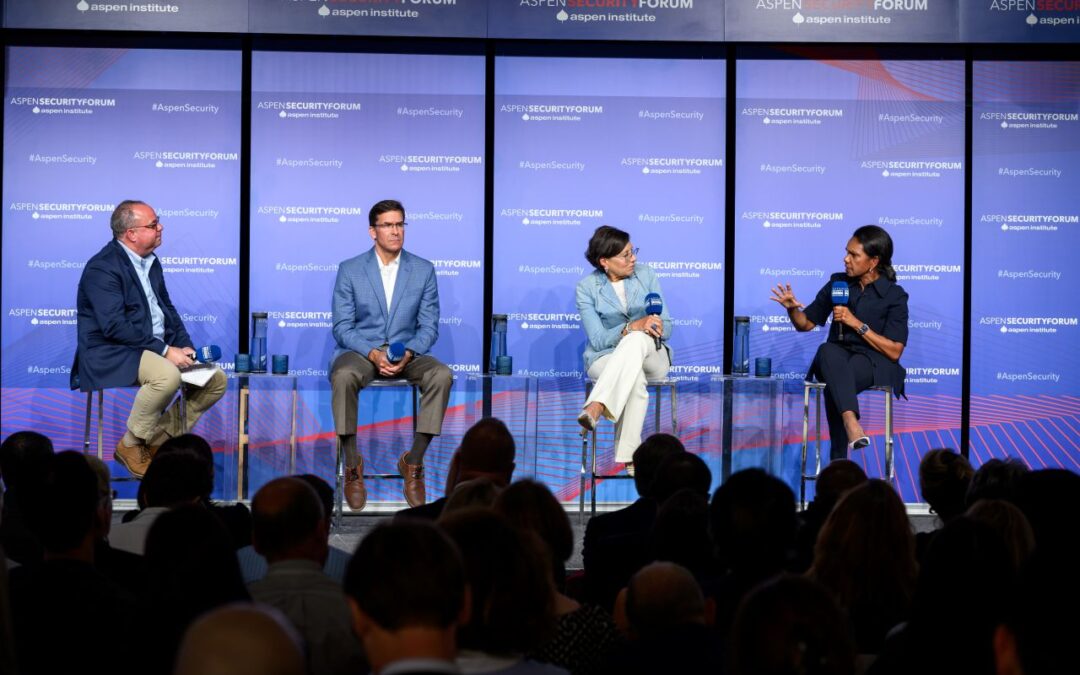
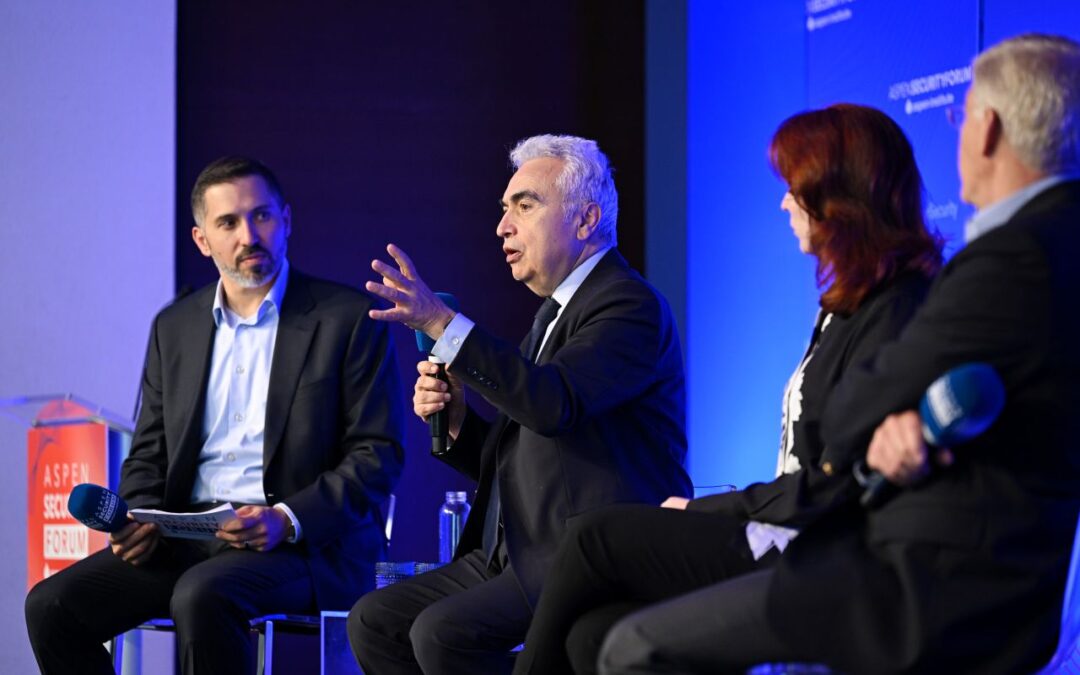
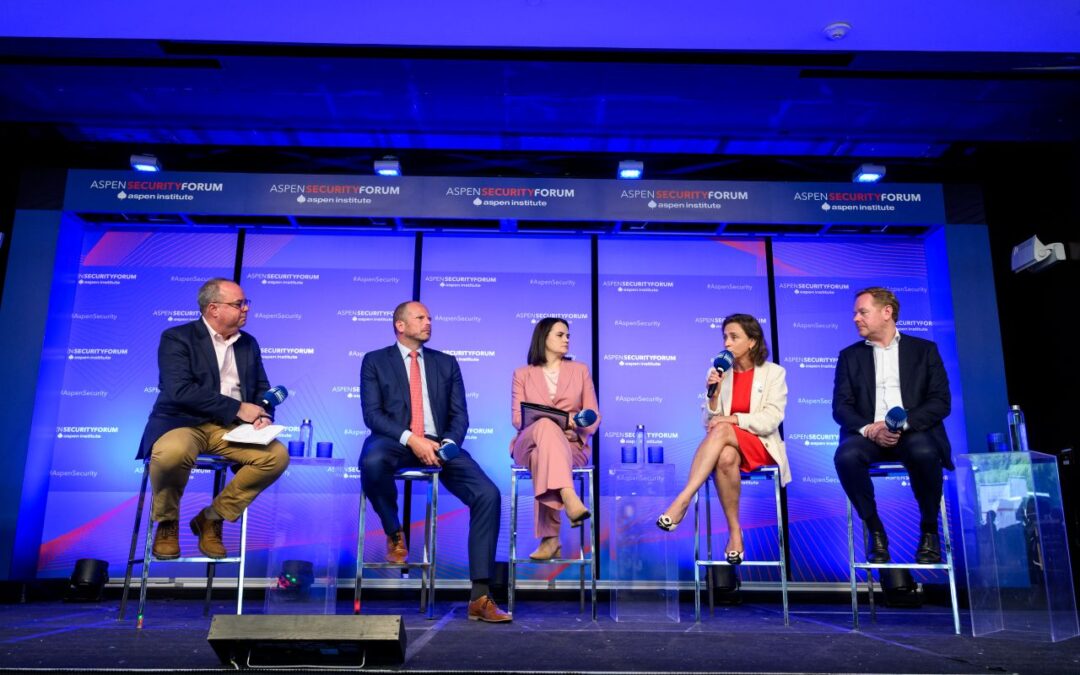
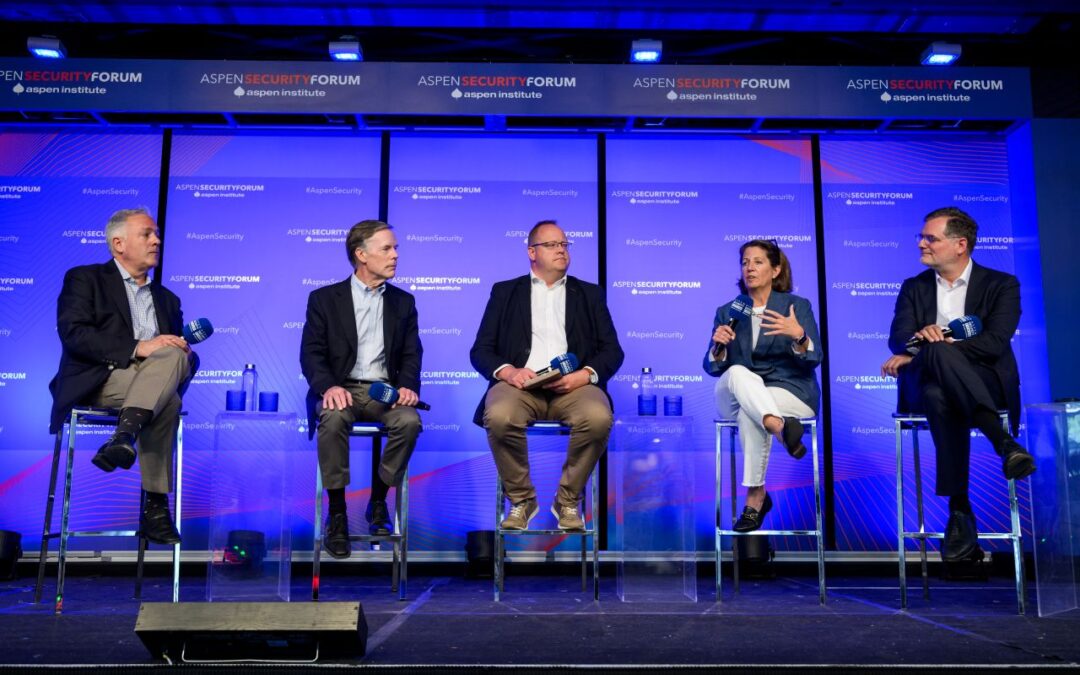
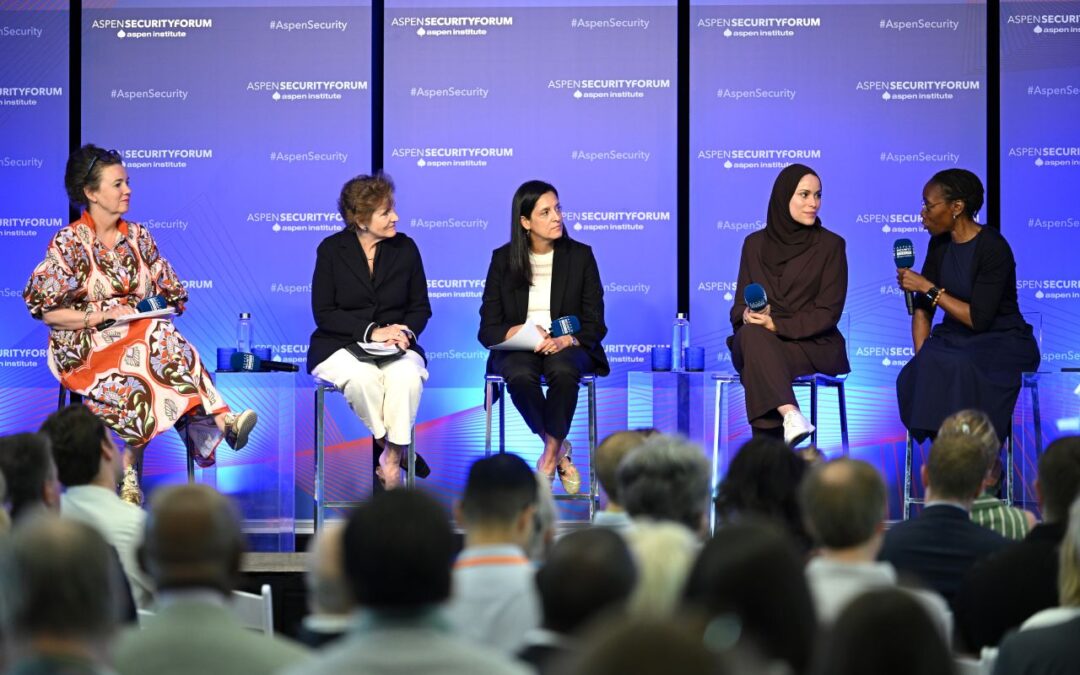
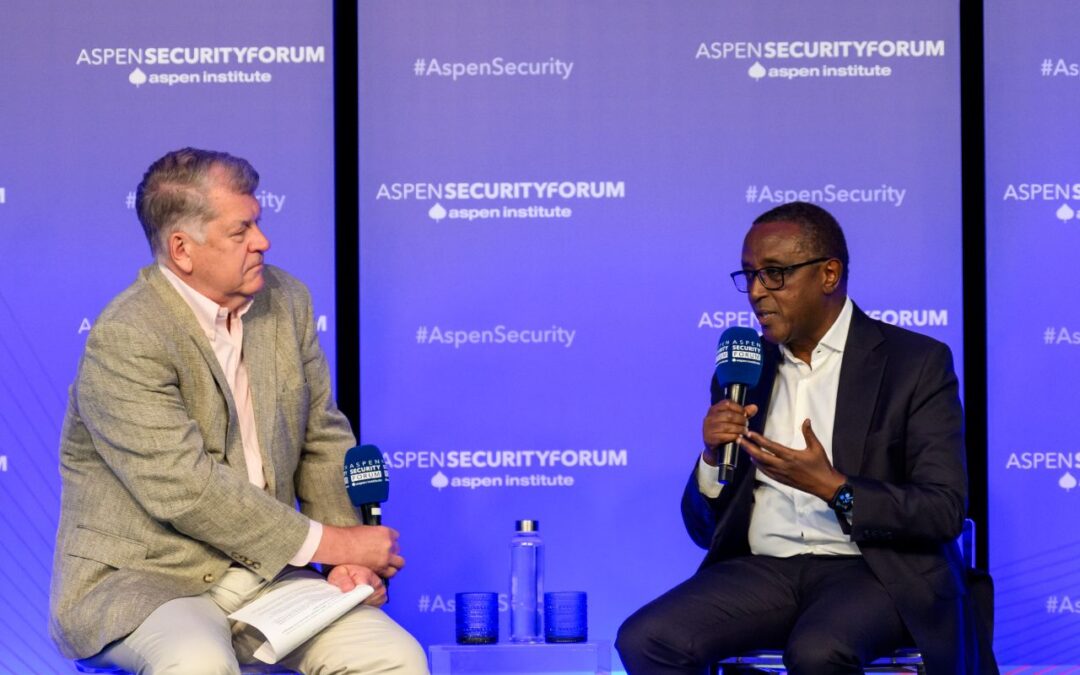
Speakers
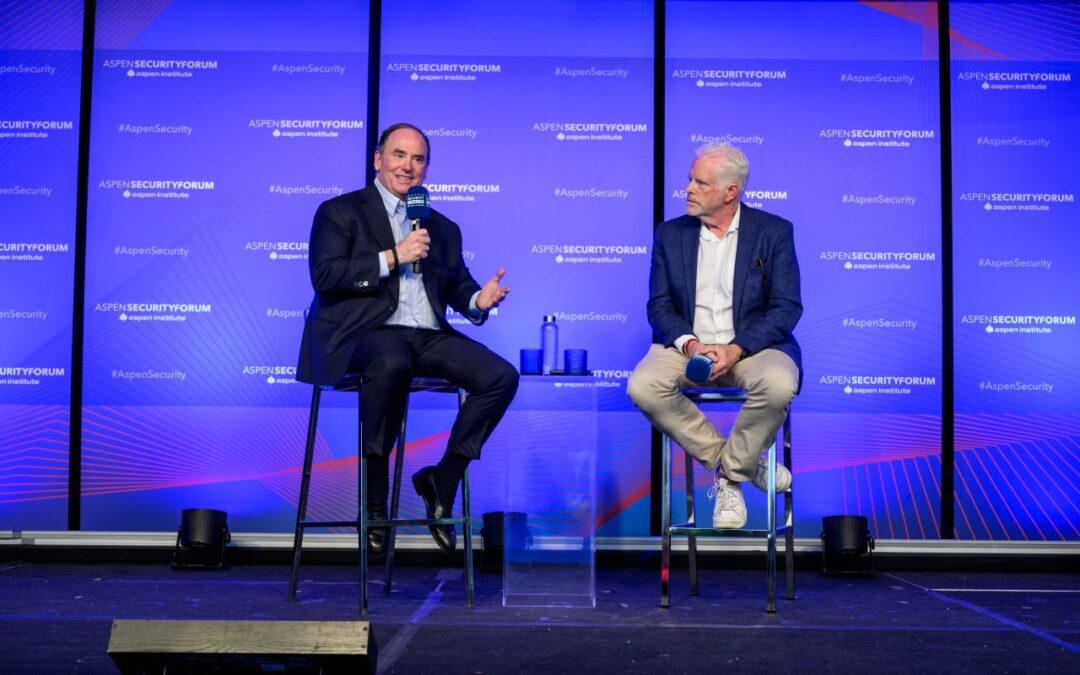
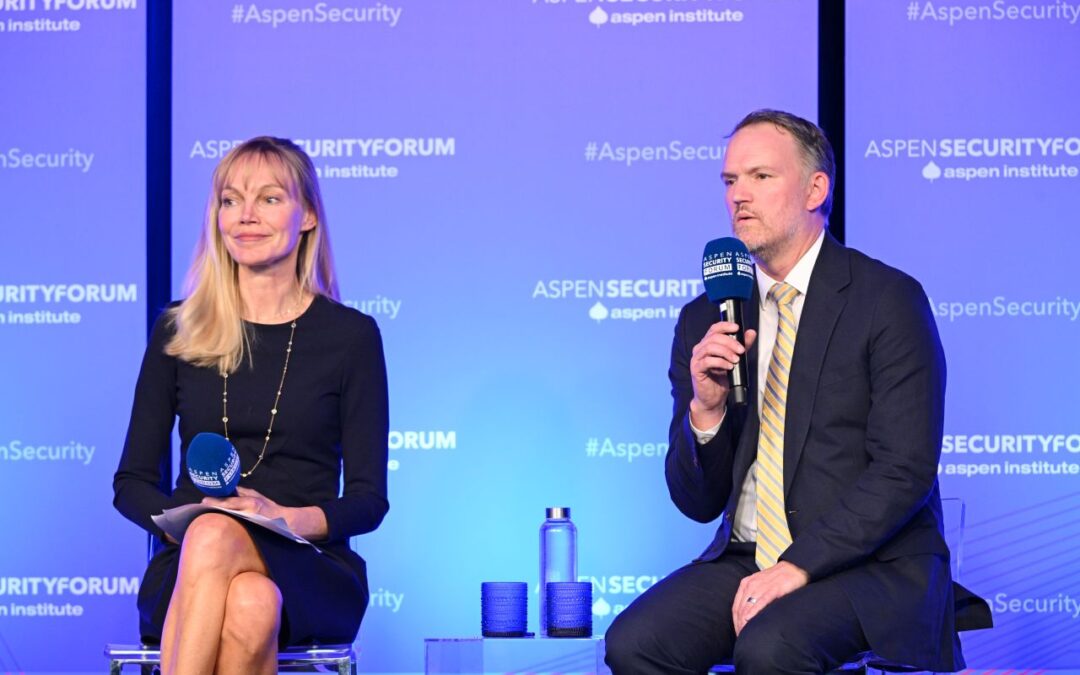
Steve Biegun, Vice Chairman, National Endowment for Democracy; Former U.S. Deputy Secretary of State
Anja Manuel, Executive Director Aspen Strategy Group and Aspen Security Forum
Mike Pillsbury, Senior Advisor, The Heritage Foundation
Moderator: Steve Clemons, The National Interest
Full Transcript
Read the full transcript below or download it to your device.
Click to read the full transcript
Clemons
Steve, thank you so much. Now, do you know which one is MICHAEL PILLSBURY and which one is Steve Biegun, we know who Anja is, but Michael, it’s great here. Let me just say what it’s a very weird feeling to be in a room full of people where 90% of them have probably read the national security strategy, right? This is a very, very special audience, and we’re going to have a discussion of this and all things China in the next half hour, and we would like to try to get a couple of questions, but we’re gonna go as quickly as we can. But Michael, you’ve worked and I should also mention, Michael wrote “The 100 Year Marathon: China’s Secret Strategy to Replace America as the Global Superpower,” to be fair to Anja as well, that was written in, I think, 2015 and then Anja wrote “Brave New World: India, China and the United States” in 2016 so we’ve got about a decade to test whether you were right or wrong, or where we are in this process. But I want to start out with Michael, you worked for eight presidents. Have you ever imagined a national security strategy being applauded by Russia and China, you know, being the hallmark of this moment?
Pillsbury
That’s a trick question, right?
Clemons
You know, I’ve learned a lot from China.
Pillsbury
The reaction is mixed from both Moscow and Beijing. The Chinese reaction back in 2017 to Mr. Trump’s first national security strategy was hysterical. They attacked it. They said this shows the Americans are out to contain or even destroy China. They had quite a long list of complaints. This one they have not attacked. The foreign ministry spokeswoman said something vague about this is we always want a win-win situation. So I think President Trump is succeeding in this national security strategy and one of his goals toward China, which is a successful visit in April for him and Melania and then for Madam Peng and Xi Jinping.
Clemons
But take it a step further.
Pillsbury
I mean, this is, this is a deliberate effort by Trump to calm things down. Not call China an enemy, not use the harsh rhetoric that appeared in 2017 and dare I say, in some of President Biden’s documents as well.
Clemons
Right
Pillsbury
China is referred to very, very harshly. That’s not done in…
Clemons
But take it a little step further, Michael, because when we were talking in the back room. We were saying, you know, I did a, you know, silly word count. And China’s mentioned 21 times. Iran’s only mentioned three times. If I were, Iran I’d feel neglected, I guess. But 21 times you said, no, no, much, much more that the nuances, the subtleties of reference, Anja, you seem to be jumping at that that seem to be much more dramatic in this report, kind of beneath the surface.
Manuel
Yeah. This is the only audience where every single person has read the national security Strategy.
Clemons
Yeah, sorry if I’m leaving 10% off.
Manuel
Yeah, I thought the China pieces were pretty much right down the line. And I actually support a lot of what’s in the national security strategy about China. And you’re right. There are many references to competitors. They don’t call China out by name, but there’s a lot of conversation about people making inroads in the Western Hemisphere in terms of critical minerals, other business things also, they call out China’s kind of information wars. I thought it was really straight down the line. And the other thing that I would really support is that there was a very clear statement in the national security strategy about why being involved in the South China Sea is in our national interest, and why being involved with the Taiwan crisis is in our national interest. So, I thought that was good.
Clemons
Stephen, I’d love to get your take on this strategy, as far as being a blueprint for the near to midterm future. Do you think this establishes the pattern of a blueprint when you know, if you sort of step back and say, a lot of the definition of America’s defining challenge in the next era is somehow dealing with one another, or managing, confronting, perhaps rolling back, in some ways, the anxieties and challenges of China. Does this national security strategy move that agenda forward compellingly?
Biegun
Less so on China than in other parts of the world. I do think the China treatment is the most interesting part. By the way, I disagree with both of you. I bet no more than 50% of the people in this room have read that, but…
Clemons
How many have read that?
Manuel
There you go, all the rising leaders.
Biegun
But 100% have spoken authoritatively about it.
Clemons
So a lot have read it…
Biegun
But everyone’s spoken like they have. In the China section, it tries to reconcile something that’s unreconciled in President Trump’s policies. President Trump does have a very clear view on how to approach China. Mike I think accurately describe that what the President is looking for in terms of deliverables in his upcoming meeting with Xi Jinping and then the subsequent posting of Xi Jinping later in the year. The kind of overlay is definitely an authoritative representation of President Trump’s view of what he wants out of the US China relationship. But underneath that are elements of a roiling debate inside the Trump administration itself over different issues and different approaches to China. And then that was combed over and denuded of the word China as much as possible. It shows up 21 times, but when you read the section that numerates all the things that certain countries might do that we won’t allow them to do it. You know, you can just put a China in each one of those two, but that was probably taken out.
Clemons
So was that Treasury denuding State?
Biegun
I don’t know. I don’t know the internal politics of this.
Clemons
Of course you do.
Biegun
I could speculate, but, but I think there’s a, there’s a more important conclusion to draw from this, which is that the Trump administration is a coiled spring. When it comes to China policy, the President is keeping that spring compressed. Right now, because he has a very specific view on the President’s view matters most of all inside his own administration. But if anything goes sideways in this relationship, you’re going to see a lot of fireworks.
Clemons
Let me ask you Anja and Michael, one of the things that’s been on my mind, we just had the Europe panel. I wasn’t able to hear all of the Europe panel, but there’s, you know, other elements of America’s global power network, and you know when I read Michael’s work on this and China’s efforts to supplant the United States as the most definitive power in the world. You know, I guess my question to you would be, if, if we were to take this book seriously, we take Michael Pillsbury and his warning and caution seriously, would you have the sanctions policy towards India we have? Would you be beating up the document Europe? Would you have the AI strategy that we have? That seems like an America First strategy, but you really need much of the world with you. So my question is, if China is the defining challenge in some way, whether it’s a coiled spring or not, how consistent or inconsistent are the other parts of national power, national economic strategy and supporting that? Or do we see massive, raging contradictions? Anja?
Manuel
I was going to let Mike take that softball first.
Pillsbury
I was going to let you go first.
Biegun
I’ll take it.
Clemons
Anja, you go first.
Manuel
I got it. I think there are raging inconsistencies, right? That doesn’t mean that you need to do everything that you need to cowtow to, everything that our allies do. Of course, the Europeans need to do more burden sharing. There are some things that Indians do. It’s one of the most protectionist countries on earth. We’ve all dealt with them. There are things that are frustrating and that we should start but by and large, my view is, when you have a very dangerous near competitor like China, you sort out your dirty laundry with your friends and allies in private, and then you have a united front. And I worry that that is not what we are currently…
Clemons
So you whisper civilizational erasure quietly behind closed doors?
Manuel
I don’t whisper civilizational erasure, but others might. That’s okay, but I do think President Trump does deserve a lot of credit. And Steve was a part of this in the first Trump administration, for calling out the threat from China and addressing it head on in a lot of places. And now I think Steve, you’re right. I think you’re seeing kind of a back and forth in the administration’s China policy, depending on which advisors are currently on top.
Pillsbury
May I give a different view?
Clemons
Yes, absolutely.
Pillsbury
Mr. Trump has let me tape record him for a couple of hours for my next book, and I think it’d be okay with him if I describe a couple comments he’s made.
Clemons
Certainly okay with me.
Pillsbury
First of all, how many people in this room have met Xi Jinping six times for two hours each? That’s Mr. Trump. I think he considers himself with good reason to be an expert on Xi Jinping and Chinese strategy. So this has to be thought of, this kind of document and others that are coming have to be thought of as kind of like the second or third phase of his China strategy. There’s no longer any need to demonize China or, you know, tell the allies to buy this weapon system in the case of Japan and the tomahawks, we’re in another phase entirely where Xi Jinping may not serve a fourth term. We’re looking at the possible successor to him. Obviously, he could be a hard liner. It could make us wish Xi Jinping came back that he wasn’t really that bad, or it could be a real reformer. The kind the New York Times has dreamed of for about 30 years now. That’s the period we’re in, the US China relations. And I noticed one Chinese criticism, which I think is mistaken, is the description of Taiwan and Taiwan policy. They’ve been putting pressure on you must say, we oppose Taiwan independence, not do not support there’s a big difference in Mandarin between the two. He didn’t do that. He didn’t give in. He does talk about his personal relationship with Xi Jinping, which is not just bravado. This is letters. I’ve seen some of the letters. They can be four or five pages long, phone calls, intermediaries. This is a relationship which is quite deep, if that’s the right word. And so I think we have to read into this kind of document. A lot of Mr. Trump’s own language is in here.
Clemons
So let me just jump in, Michael and ask you, and you’re the Super Hawk in Washington that the Chinese talk to. In fact, Steve Bannon has accused you, a Super Hawk, of being a collaborator with China sometime. That is actually true.
Pillsbury
That’s true.
Clemons
But my question to you is, is it your sense that the Chinese are deterred, intimidated by President Trump? Cause part of this, and what we’re discussing today is how China is reading this moment. How are they stepping forward? Do they see 2027 as an opportune time to begin actions over Taiwan? You know, we saw rare earths versus chips and a standout where both sides are looking at each other in a potential economic rift that could have escalated in very nasty ways. How are they reading President Trump from you – and you were just in China.
Pillsbury
Yes, there’s a translation that’s almost a best seller, I would say, in China, the art of the deal. And sophisticated Chinese can quote back what Trump did for, like, the Atlantic City casino, how he got the drop on the Conrad Hilton family. There, they think of him as like he thinks of himself as a deal maker. But the problem is, what exactly is the deal that Trump wants? This is the problem for China. Did he really care about nuclear, strategic stability talks did he really wants the Chinese delegation to show up in Vienna in June of 2019? China didn’t show they implied that they would. They’re listening to track two ideas about strategic stability. But does Mr. Trump really want this? Does he want subsidies to end to the national champions. China will never do that, but that was part of the first administration. So it’s very difficult for the Chinese side, and they work hard at it to figure out exactly what concessions do we have to make to Mr. Trump to avoid, he is really hurting our economy badly. And each side, I think, seeks leverage on the other side, they scored 100%. They scored an A-plus on the rare earth export license. They were even cute about it. Anja, they said, you’ve always been asking us to control our sensitive exports. So now we’re going to control all of our rare earths, and it will take a year or two to process them, because there are so many. The American side was flabbergasted. It’s a brilliant move by China. They got leverage on us for a while. But now what’s going to come up next?
Clemons
Right. Stephen and Anja, so since strategic stability has come up, I mean, China now has 600 nuclear warheads, a massively shifting modernization and enhancement campaign with nuclear weapons. It’s clear that and Steve, if I can out you, you are part of the team, Team B, strategic stability discussions, which have gone on for three years. My sense is you haven’t achieved much yet, because they keep rebuffing any official measures in terms of looking at Arms Control. But I’m interested, from your perspective, is there anything out there that is happening that you see fruitful by way of a China-US deal around nukes, and what are they trying to do with nukes and the broader elements of strategic stabilization?
Biegun
So while we were in the back room getting prepared for our panel, I think Admiral Mullen mentioned this, but he and I are going to arrive on Sunday in China for the next round of track two discussions between former senior diplomats and US military officials on these very…
Clemons
So it’s now no longer secret.
Biegun
I didn’t say it was secret, it’s a track two dialogue. But track two dialogues have an important role to play in policymaking, but they don’t make any progress if they don’t connect to official level engagements between governments. And President Trump has been very clear. He’s interested in looking at nuclear issues and potential even nuclear arms control with the Russians. One of the antecedents to that is strategic stability, which is a which is a culture between nuclear powers and an adversarial state that we pioneered with the Soviet Union in the 1950s 1960s and 1970s through an accumulation of near misses and terrible misunderstandings, false readings on radars and sensors, decisions around the Cuban Missile Crisis, moments that brought us to the brink of nuclear Armageddon, and we learned a certain muscle memory from from those experiences. Now it’s well understood that this is an antecedent to arms control that can create more stability in the strategic space. Chinese are talking about this at a track two level. Mike has been part of this is, as he shared with me, and I have and others as well. But it doesn’t make any difference if it doesn’t get to the track one level, if there aren’t government, government discussions. My sense is…
Clemons
Is it going to?
Biegun
My sense is it is certainly across the previous administration when this began, but also consistent with what President Trump has said publicly about China and nuclear weapons. Nuclear weapons, I think that, I think the desire is there on the United States side. The question is, will the Chinese go there? The Chinese will argue that they can’t be locked into an inferior position on nuclear weapons. But that’s a false argument, because of the multiples of destruction that these capabilities have. But we should be very alarmed at China’s build up. China’s build up will create two pure competitors and nuclear weapons, the Russian Federation and the People’s Republic of China, and our nuclear weapons are not sufficient to deter both at the same time.
Clemons
Anja?
Manuel
Also the Chinese keep purging the PLA generals in charge of their nuclear forces. So very hard to have a track one when you don’t know who’s there on the other side.
Clemons
Let me ask you the other part of the topographical change, if you were to look at, you know, the security dynamics is AI. You know, if you listen to Kevin Rudd, who’s spoken for Aspen many times, and he says, Xi Jinping wakes up every day, talks to his team. What do we achieve on AI? How are we winning on AI? What are we doing on AI? That the relentless, very big. I don’t know if Kevin is right, but I, you know, imagine he’s got some insights into essentially, the prioritization of the AI race on you were just in China, and I’m interested in the dynamics of this, because, you know, with all due respect the Washington or all the AI obsessed people. It seems to me that China has a very big footprint in the world LLM models. And when you look at all of the kind of factors of competition, the sort of, you know, the array of forces you want to bring on one AI side versus the other, I think we see a lot of dissonance with Europe. And I don’t know how we win the AI race without Europe. How, what did you learn about where AI is in China right now, and how they stand up to the United States?
Manuel
I was there a couple weeks ago, exactly as you said. It was deeply worrying and deeply impressive. And not just on AI. When you go to China, the two-speed economy is in full effect. The ordinary economy is struggling. When you talk to your DD drivers, they’re not doing very well, the property boom and now bust. All of that is real. But when you look at the technologies, and it’s not just AI, right? It’s what they’re doing to catch up on semiconductors. It’s where they are. Nine out of 10 of the most cited research institutions in the world right now are Chinese. Only one is American. Their, you said it, their LLM models are basically neck and neck with ours on semiconductors. We have a real lead at the most advanced nodes. So that’s why I, and I think a lot of other people in this room worry very much about this back and forth of export controls that we’ve had and letting the age we can talk more about this. But, it’s a mistake to let the H-200 go.
Clemons
Well, I mean, it’s the American stack versus the Huawei stack, right? That’s part of the dynamic on whether dependency on, you know, generations of US systems and technology is a compelling story. There are some that see, oh, that’s a way to leak technology to China that it can mimic and copy. Where are you?
Manuel
The problem is the Chinese are not complacent, and they’re not going to continue to be dependent on us and our tech stack. They are racing as fast as they can to catch up. And if they can get some of our best, even if it’s not the Blackwell or the Rubin, which are even better, some of our very, very highly competitive chips in the meantime, they’re going to take it. But let me say one more word, because it’s actually not just AI. I feel like every panel is about AI. It’s about 5g and 6g. They have base stations everywhere. It’s about how they’re diffusing it. It’s about biotechnology, where we’re neck and neck. It’s very hard to see what the Chinese are doing. It’s about financial technology. I would say President Trump deserves some credit for finally allowing blockchain technology move. But the Chinese have a replacement for Swift. We will no longer be able to enforce big secondary sanctions around the world. So this is happening, and I’ll just leave you with one visual. I was in this very rural southern province of China, with brand new roads, beautiful bridges, as you would expect. And you drive around one corner and there are literally mountains and mountains covered in solar panels. And you’re like, why do you need so much electricity here in the middle of nowhere? To power the Huawei and the Tencent data centers, and they’re leaning in. Every student in China. The Ministry of Education has a process for each student, K through 12 in China to start learning about AI. We’re falling behind.
Clemons
Let me just ask you both a kind of cosmic question, which has been on my mind, and then maybe, hopefully, we’ll get Jane Harman to throw, you know, a bowling ball into this. Stephen, China wasn’t supposed to be able to succeed like this, command economy, Chinese Central Committee party looking at, you know, the kind of planning it was doing. Non market behaviors were supposed to screw up and fail without liberal markets, without, you know, the right incentives. I mean, there was a lot of hubris, frankly, built into the notion of American success. It has taken a long time to recognize that, in fact, China is now a real peer competitor. That he has achieved a lot. Has it changed? I want to ask you a question about the US psyche. Do we need to go back and rethink? Do we? I see a lot of what President Trump is doing by way of industrial policy, by way of looking at, you know, a focus and strategy is almost trying to do a lot more of what China is doing. Do we need to win? Does America need to learn some of the norms, habits and practices that China is doing in order to compete? Because what I hear is a lot of attitude that, oh, they’ll never succeed. We’ll do it our way. American capitalism is better, et cetera, et cetera. Is that a false frame?
Biegun
Yes, I think undeniably, there are mistaken assumptions that are being disproven pretty frequently these days with what we thought would happen with China, particularly those who advocated in 2000 for China’s entry in the WTO. But that’s kind of a tired argument. What I would say, Steve is, I think we’re focusing on the wrong part of that equation. The Chinese will do what the Chinese will do, and they’ll screw up their own system at their own pace. And we’re looking at a very small data set here, right? Because 100 years they think in those well, okay, so they’ve been at it since 1949. What we need to focus on is the front part that you can win a race in two ways. One is by tripping up your competitor, and the other is out racing them. And we just, we need to. We need to put our focus on the part that we can control and grow our own economy, create our own innovative incubators, free up our own entrepreneurs, and China will sort itself out.
Clemons
Michael?
Pillsbury
Two things. First of all, back to AI for a second. It’s actually, in my view, part of strategic stability talks, just to make a vivid almost a scoop, if you’re a news person, both the PLA and DOD now use AI in weapon systems. The idea of Steve’s mentioning nuclear incidents, nuclear accidents, the most famous case to my mind, is a Russian who overrode the sensors that the Americans were firing ICBMs. I’ve been censored here anyway, a human in the loop when you’re making decisions about ICBMs coming in is extremely important, and keeping AI out of that loop is very, extremely important. But it’s not the way those in charge of Strategic Forces think. They believe AI could help know what’s a real attack, what’s not, and then decide what kind of response to make with nuclear weapons. The Biden people, I think, deserve some credit. They got Joe Biden to say a couple sentences that you know, he hopes it doesn’t happen, but it hasn’t really come to fruition yet. It’s not to be forgotten. Nuclear accidents with tremendous consequences could happen because of human error, or AI mistakenly telling the humans you’re under attack it’s time to fire. Secondly, I think somebody here today should mention the word rebalance, or balance, that’s about 30 times in the report. And what that means is a focus on a number of economic things. Don’t let the South China Sea charge a toll, have tolls required to go through or be turned, have traffic turned on and off. There’s a series of these things in the report. Try to sell more American exports to low income countries. The report actually says we do not have a strategy for how America can sell more to low income countries. The Chinese do, and it gives figures how much this is increasing in China. So I just want to recommend everybody read this, not just here in the room, read this report. It’s quite an intellectual feat to go into all of these things when as Steve mentions the interagency process may have been quite nasty.
Clemons
Anja, how is the China challenge changing who we are in the sense of what we need to do here in the United States?
Manuel
I think it’s keeping us on our toes. And I want to associate myself with Steve’s comments, is that you can only do so much to hobble your opponent, and in the end, it’s not very much, and most of it has to be us running faster and so on technology, I think that’s the most important. And I think the Trump administration is doing some of those things extremely well, the changing, the super convoluted permitting for new electricity, the new EO on defense acquisition, all of the changes happening there. A pretty good start, a good EO on AI and education. So there’s some things that are going quite well, and then there are others where you just kind of scratch your head, like Senator Todd Young is up here a lot on our stage. He was one of the people who pushed the endless frontiers act. We got an enormous amount of extra money for basic R and D that was chronically underfunded. And now with DOGE, the National Science Foundation budget was cut by another 56%. It just doesn’t make a lot of sense, right? And then for things like holding up the export controls, you don’t have to export control everything. I actually think the Biden administration went a little far. But where we have choke point technologies like the most advanced chips or the most advanced equipment that makes the most advanced chips, we should be denying those to the Chinese with our allies. So, mixed scorecard.
Clemons
Since I haven’t seen a timecard go up, I’m gonna throw a couple more questions in real quick. Were you still okay on time? Okay, good, Steven. Oh, I’ve got more time. Great. Oh, cool, Taiwan, Taiwan. Stephen, I know the Pentagon is a coiled spring on Taiwan. Is President Trump? Does President Trump really, really, really care about the future of Taiwan in a defining way in which a kinetic conflict would be part of that playbook, or are we now moving into a different phase on Taiwan’s place in the world?
Biegun
The very fact that you asked that question, and I don’t know the answer, tells us that strategic ambiguity is working. I don’t know for sure, and I’m not sure the President has decided either, but in that case, that means the Chinese don’t know for sure either what the President will do. And to me, that has a salutary effect.
Clemons
What do you think the Takeuchi Imbroglio has shown in the Taiwan situation?
Biegun
You know, I think the less said on the topic the better, is generally, this is not one that gets easier to solve with greater clarity, certainly not when there’s also ambiguity of the effectiveness of the deterrent. We can be a lot more precise than what we say about the policy if we match that with a deterrent. And this was my criticism of the Pelosi visit to Taiwan is that it was a provocative visit. It was performative, but it was by a member of Congress who wouldn’t support significant increases in defense spending to deter China. To me, that’s just strategic recklessness.
Clemons
Michael, I’m going to ask you the same question, but I want to do a little caveat. I interviewed Robert O’Brien, former National Security Advisor to President Trump, about Taiwan and about, you know, their goose and golden eggs, you know, TSMC, the chips industry. And he answered by saying, it would be reminiscent of Churchill crying before Parliament about his need to bomb the French fleet, and intimating that if China were to take over Taiwan, that nothing would be left of the semiconductor industry in Taiwan. It’s got quite a reaction from Taiwan, but it also got quite a lot of reaction from a lot of people around President Trump to me privately saying that absolutely is not the direction that Trump would go. I’m interested in you know, in your conversations with the President, and I’d love to know how you see the temperature on Taiwan with him.
Pillsbury
Going back to Trump Tower in December of 2016 the President put out a, President-elect, put out a press release that he just spoken for eight minutes with the president of Taiwan, and at the same time back channel, he was inviting Xi Jinping to come to Mar-a-Lago. The Chinese immediately came to New York to explain this is not done, and would not have the first Mar a Lago summit until the president essentially apologized and took it back, which he refused to do, but he put out a very artful post that President Xi Jinping had called him and asked him to abide by the One China policy, and therefore he was going to do that. Now President Trump, elect Trump, at the time, also did a lot of homework, asking What exactly did Nixon and Kissinger and then Jimmy Carter agree to and it turned out this is not easy to explain, and almost nobody in the room will pass an elementary quiz. I started asking them, what about this? What about this? But one of the key sections is no official contact between the two militaries. Now, there’s a bill up right now to have, in fact, the President signed it. That implies there could be contact, according to the Wall Street Journal front page…
Manuel
Between the US and the Taiwanese?
Pillsbury
Yes. between the President Trump, according to the Wall Street Journal, put US forces on Taiwan for the first time since the Nixon Jimmy Carter trips, this is a major violation of the Chinese understanding of the One China policy. So. It was done secretly by President Trump, according to the Wall Street Journal. I don’t know who that was, who leaked it, but that hurt a lot. The president of Taiwan, or as the Chinese say, so-called President of Taiwan, then confirmed that there were American combat troops on the island. That’s, the Pelosi trip is bad enough, but this is quite different from the Chinese point of view. It’s not the Congress, it’s the President of the United States, President Biden then continues some of this National Guard training, and it’s not addressed in the national security strategy. But if you read a book called “The Strategy of Denial” by Bridge Colby, chapter 10, it tells you denial means after the PLA gets a lodgement on Taiwan and occupies two or three cities, we American DoD forces have to be guerrilla advisors and force the PLA to evacuate Taiwan. I’m not doing justice to Colby’s full argument. It’s 20 pages, but it shows someone has thought through how to fight a war on Taiwan. The Chinese can read the book. It’s the Yale University Press. $25. All the Chinese I talked to have read it, and you can imagine their enthusiasm when the author, Mr. Colby, was named Under Secretary of Defense for Policy, and that is in the strategy the word denial.
Clemons
Michael Pillsbury was just showing me a list of who China considers to be the super hawks in Washington and Bridge Colby was number one. Michael Pillsbury was number two. So there we go. Anja, I’d like to get your sense on strategic ambiguity on Taiwan. And I remember, you know, at the Aspen Security Forum, out in Aspen, Qin Gang, you know, then the Ambassador of China made very, very strong statements on the state of Taiwan. The Biden administration had sent signals that they feared were changing the status quo in the region. Out of our accusations that China was trying to change the status quo. It’s quiet, pretty quiet right now, except for Prime Minister Takaichi, and the reaction to that, which led, to, my knowledge, the first request of Xi Jinping to have a hotline call with President Trump to get him to intervene in this. But what is your sense on where Taiwan is on the ready to commit forces map of President Trump?
Manuel
I think it’s quiet right now in Taiwan because we’ve normalized ever more incursions by the Chinese military around the entire island, across the center line. It’s just, it’s a very dangerous situation all the time. And what I worry about, back to Steve’s point of minding our own knitting, our US military is the best in the world. We’re great war fighters. We can think through the campaign over Taiwan if there’s a kinetic war all day long. But the strangulation strategy is happening now, and when I you know, I spend Steve is in the back, my business partner. We talk to American companies all day long. And when the Chinese do things like have a blockade around Taiwan or make it dangerous to fly in, American companies will no longer insure they won’t fly in and out, they won’t send ships in and out. The cyber attacks are real. So I worry that INDOPACOM, with all of its beautiful equipment, is preparing for conflict that may never happen.
Clemons
Let me just ask you finally, then I want to go to Jane Harman. We’ve just got a few minutes, but I want to ask you about America’s strategic focus and the seriousness of the China challenge. Last week, I had the privilege of interviewing Senator Dave McCormick and Chris Coons, and if you looked at the overlap, both of them said, we’re not moving fast enough in America that it’s a combination of everything from permitting for power stations, understanding how consequential the AI race, the global critical materials race that is underway, to kind of catch up with China’s stranglehold over much of this. And we’re sitting with a lot of here in America talking a lot about this, making some progress, but it’s just incredibly slow compared to the pace and rate that China is continuing to move every week, every month on this so I just want to ask you, from your perspective, do you agree with that from Senators McCormick and Coons and you know, what’s your gut? Are we going to be at the Aspen Security Forum, you know, this summer, the next summer, the next summer, saying, God, we really didn’t move fast enough. Anja?
Manuel
On technology, I really worry, because they’re throwing everything into the spike. We talked about it a little bit earlier, we need to run faster, and we need to do more. And there’s good work being done to integrate the best new technologies into defense and to do some of the things that we talked about. I won’t repeat them, but there is also this tendency in America to always see the Chinese as 10 feet tall. And it is true that they have a lot of internal problems. I mean, the idea that you had the fourth plenum and there’s a bunch of seats empty because everybody has been purged, is a problem, right? The idea that people, that there’s 20% youth unemployment, you all know all the statistics, but we tend to only see…
Clemons
A lot of people in the administration got purged too.
Manuel
It’s a different kind of purging. So both can be true at the same time. We got to keep hurrying. And also, I think it is important, and I think the President is right to keep talking to Xi Jinping. And for all of everyone who does the good work, and everyone in this room who does the work, to keep going to China, keep doing these track two dialogues, because we don’t actually want to misunderstand.
Clemons
Michael, can you give us a minute?
Pillsbury
I think we have to be concerned about Chinese paranoia and not feed it. You might think, gee, they know us so well. 50 years, you know, so many people back and forth. I still see it all the time about specific issues. For example, I think we should have a draft trade agreement by now. We don’t have one. They don’t want to repeat the experience of the first term. On Taiwan, one of the huge problems is our military has training and how to defend someplace. They put munitions there. They train, they exchange radio frequencies, they train together with the host, Army, Navy, Air Force. We do none of this now with Taiwan. We have no military to military contact at all, other than the exceptions I mentioned to you, there are many people who say, if Taiwan is under assault, we have to practice in advance, or we can’t win, Mr. President. The logic is compelling. So you’ll hear what I call the “real super hawks” talking now about overthrowing the regime, number one. Number two, putting weapons on Taiwan, starting exercises with the Taiwan military. And perhaps most dangerous, there’s another set of recommendations. One of them is to put the Communist Party of China on trial as a criminal organization. That’s a whole book called The Indictment. And the Chinese paranoia tends to focus on these ultra hawks, or super hawks, far more hawkish than I am, but I can’t disavow them. I can’t say Steve Bannon, you know, is not authoritative, because they will say, “Well, he talks to President Trump all the time.”
Clemons
Here we go, Steve. I give you a last word before we jump to Jane for a very quick lightning strike intervention.
Biegun
Yeah, we’re always going to be our own harshest critic. It’s just the nature of who we are, and so the criticisms from the senators are to be expected, and that helps us get better. What would concern me is that we not unilaterally disarm on some of America’s most effective solutions for the challenges we face in Russia, first and foremost is the importance of friends, partners and allies in creating a scale not only to achieve deterrence, which is absolutely critical. Deterrence cannot fail here, but also it gives China incentive to play, play its choices a little bit differently, because it’s got, it’s got to come to us, a scaled trading area among democratic countries is going to have more weight than the Chinese economy. The Chinese gonna have to think about everything from regulation to investment policies as they look at that, is what Benjamin Franklin said, “We can, we can hang together, or we can hang separately.”
Clemons
I don’t see a mic down here, so Jane, I know you go you’ve got one you were hiding. Okay, go ahead.
(Audience):Jane Harman
Hi, thanks. Hi everybody. Very interesting panel. I chaired something called the Commission on national defense strategy, which was featured last summer at the Aspen forum in Aspen, and we came to a unanimous, bipartisan set of conclusions, right? And the NSS is going in, by my lights, in the opposite direction. I am not a fan of this NSS, if you had all written it, I think it would have been incredibly better. I see most of it as a political polemic. But let me make a few points about China. Okay? The first one is, we misread China after the Cold War and made a series of bad mistakes. The second one is a huge thing we should fix right now, is we should have a hotline between US and China to avoid a miscalculation that was discussed between Biden and Xi in California and the Chinese or we, or both, have never really implemented it. And the last thing I would, I would talk longer, is to build on what Steve Biegun just said, which is the value of soft power. We have dismantled soft power in the United States and ceded the field to China, and they’re ready to take it and we really lose by abandoning our values and our institutions to fund third world countries and others who now are starving because we have left.
Clemons
Thank you. Jane Harman, quick response.
Manuel
There was a lot there. I would say China, our relationship vis a vis China, needs to continue to happen from the common sense middle of the political spectrum, and there’s a huge amount of agreement. And I feel like we do ourselves a disservice, because you get far right and far left, you have the super hawks and maybe very few doves left, except a few in finance. But so, let’s stay in the middle.
Clemons
Stephen, final word?
Biegun
There’s been a great convergence in the United States on China policy, from academia to expert opinion to business community to human rights and normative organizations. I’m not sure that survives a deal with China, and this is what I would watch is whether that convergence that has created some stability, quite honestly, in the US China relationship right now, fractures in the wake of some kind of deal.
Clemons
I love the tension of that. Thank you. Michael, final word.
Pillsbury
Thank you Jane Harman and the Wilson Center over the years for bringing China to the front as an issue. I do think the coming year is pretty much set, the visits, the exchanges, but I would close because John Moolenaar is here by saying, God bless the Select Committee on the US China competition. Because many, many ideas are coming out of that committee. He’s got a very aggressive staff. They’re asking the right questions, and they introduced an idea just two words, “China week.” Have you heard of that? It’s not W-E-A-K, it’s W-E-E-K, when he authorizes anybody to come to the floor with amendments about China, I don’t think he’s hearing me right now, because Dimitri is occupying his attention.
Clemons
Let me, let me just say, First, there’s been a very rich conversation. We got a little bit of extra time waiting for our two members of Congress. We’re doing a one two punch on China. We’re gonna have the Congressman up here next, but Steve Biegun, Michael Pillsbury, Anja Manuel, thank you for a fantastic conversation.